

Lab certified
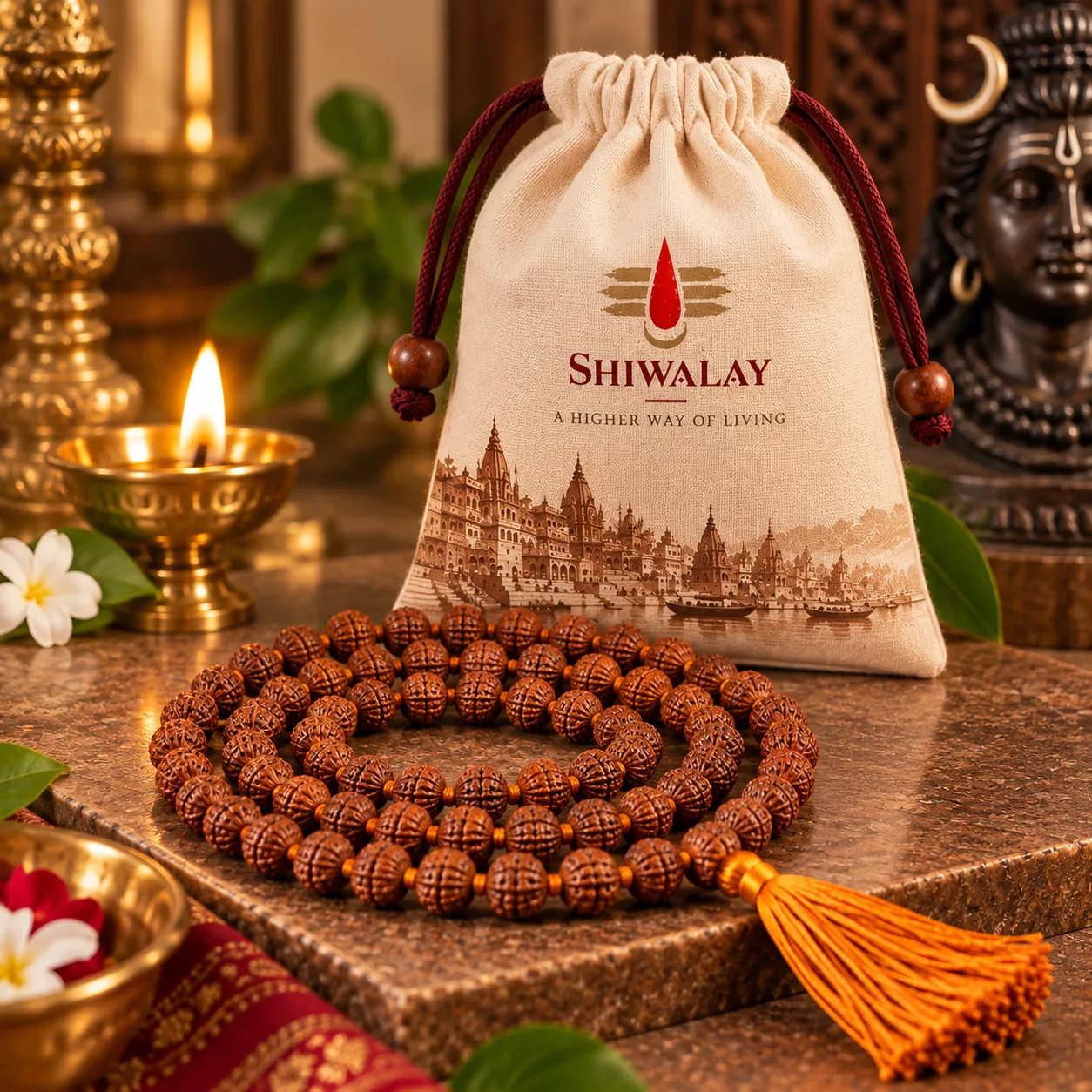
5 Mukhi Rudraksha Japa Mala
108+1 Nepal beads, 7 mm, silk-knotted
₹3,0995.0·1
Nepal, strung in Haridwar
Categories
Popular ranges
By purpose
Festivals
Festive storeDhanteras in 3 days
The lines on the outside of a bead don't always match what's inside, and that is how most people are fooled. Every rudraksha we sell is X-rayed first, and the report comes in the box. Nepal and Java beads named honestly, energised at Kashi on video if you'd like it. Not sure which mukhi? The finder takes a minute.
Sourcing model CSupplied by one certified partner who holds lab-tested stock. Shiwalay designs the certificate and the energisation.
Before you choose
Three things tell you about a rudraksha: where it grew, whether its lines are natural, and how it was strung. Nepal beads are bigger and more deeply ridged than Indonesian ones, and they are the beads the classical texts describe. Every Shiwalay bead comes with an X-ray report that counts the seeds inside against the lines outside. It is the one test that cannot be faked.
01
If you are new, start with 5 mukhi
It suits everyone, comes with no restrictions, and is the bead the texts give for daily japa. Higher mukhis are worn for specific reasons. Talk to someone you trust before you buy one.
02
Silk for wearing, silver caps for keeping
A japa mala should have a silk knot between beads so they do not grind against each other. Pendants and single beads are capped in 925 silver so the hole does not wear.
03
Bigger is not better
A natural 5 mukhi bead is 6 to 9 mm. Very large beads are collector pieces, not better for wearing. Look at how deep the ridges are, not how wide the bead is.
1 product
108+1 Nepal beads, 7 mm, silk-knotted
Nepal, strung in Haridwar