

The range
Shivling
Shivlinga for the home altar, in stone, metal, crystal and parad
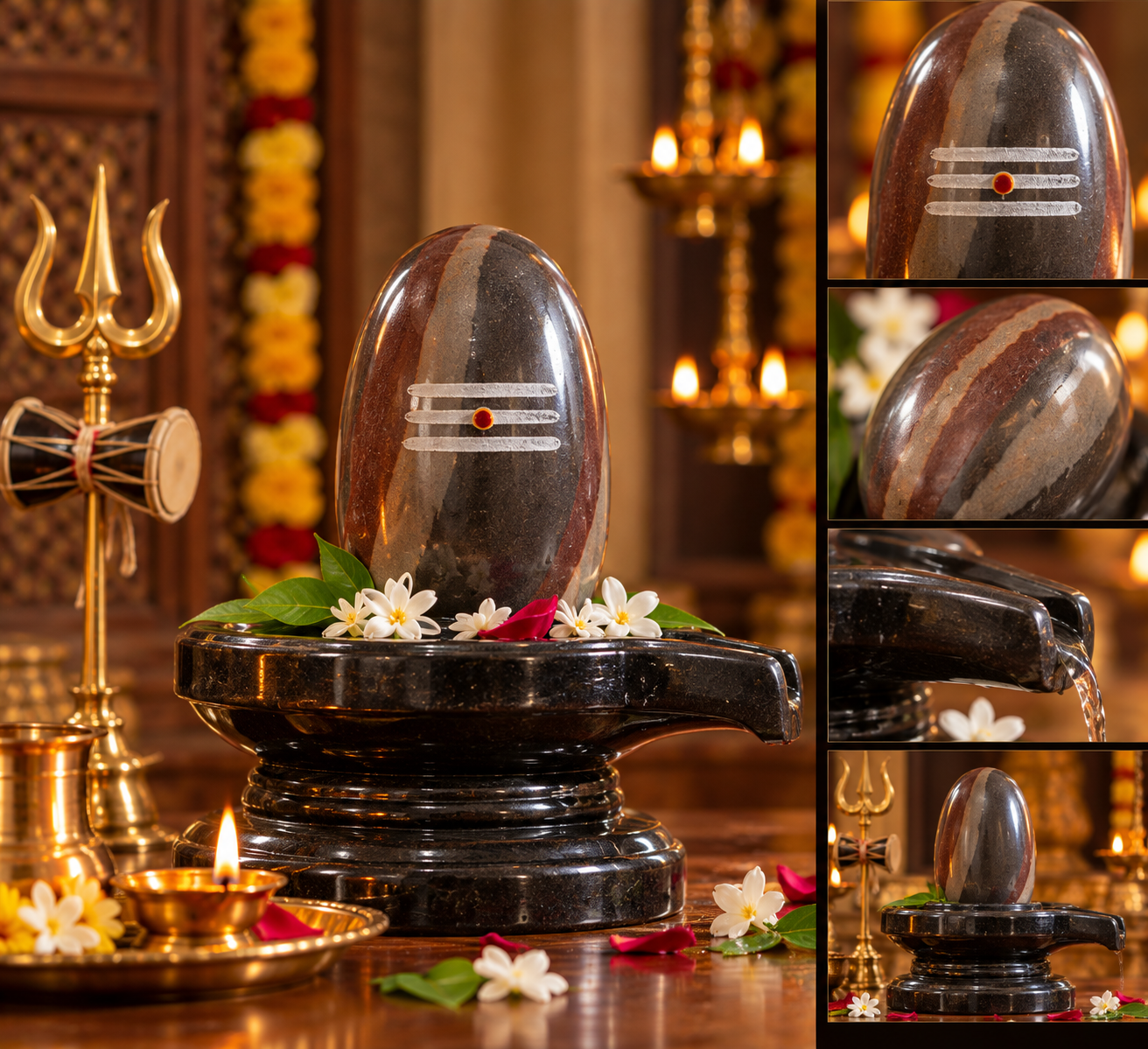
Narmadeshwar, sphatik, parad, ashtadhatu and gemstone shivlings, each with its material stated and its care explained.
Before you choose
How to choose a shivling
A Shivling (Shivlinga, Shiva lingam) can be made of any sincere material; the Shiva Purana lists lingams of clay, stone, crystal, metal and parad. What the material changes is the daily practice. Stone from the Narmada and cast metal take a full abhishek of milk, honey and ghee. Sphatik and gemstone shivlings take water only. Parad is handled with care and its abhishek water is never consumed. Choose by how you will worship, then by size.
01
Daily abhishek: Narmadeshwar or metal
A Narmada bana lingam is self-formed river stone and needs no installation rite. Ashtadhatu and brass take every offering and last generations.
02
Meditation and the study table: sphatik and gemstones
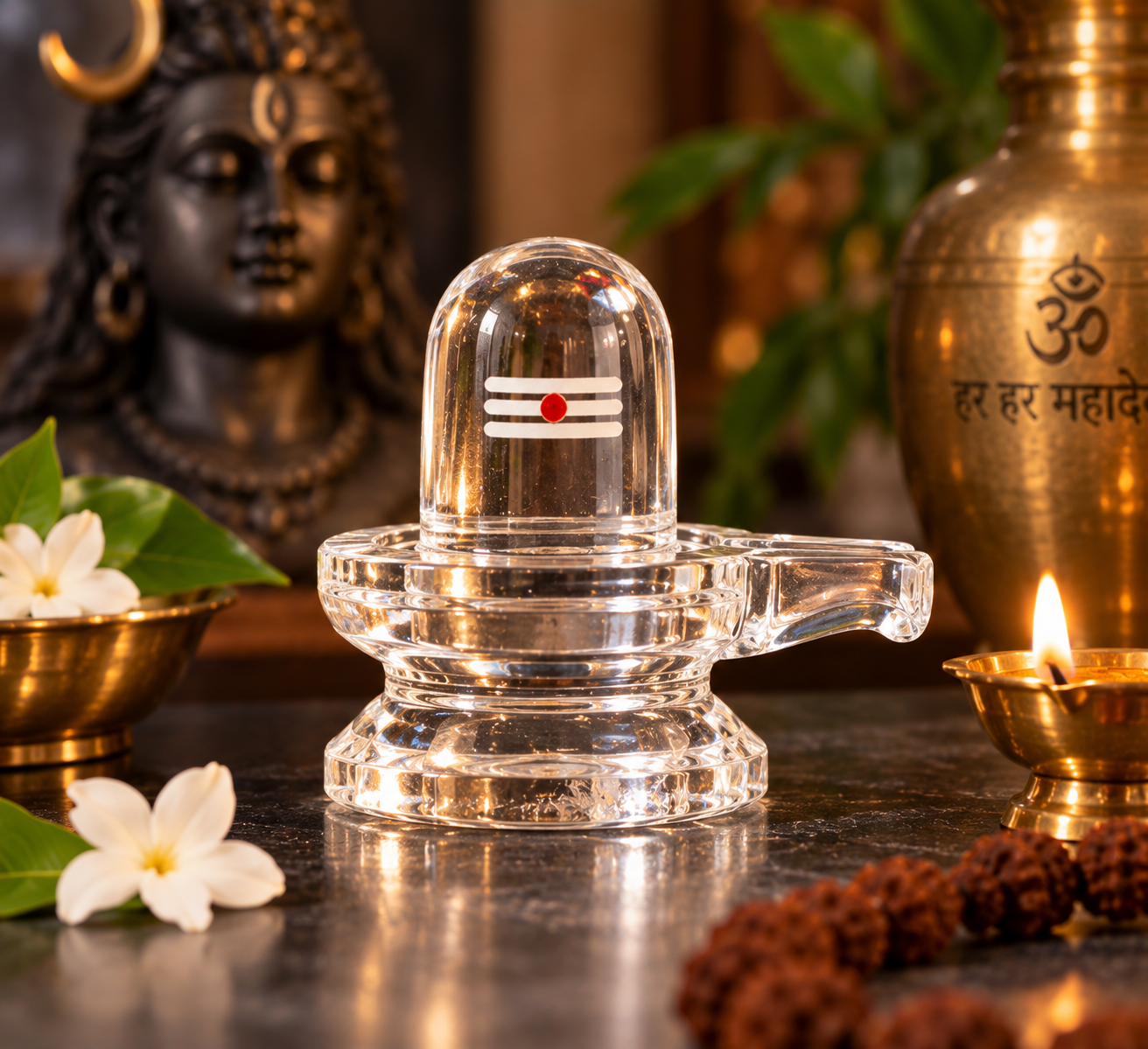
Clear quartz, rose quartz, tiger's eye, black agate and green stone shivlings are kept for a quiet practice, with water abhishek only.
03
Keep it small at home
Tradition keeps the home shivling no taller than the worshipper's thumb to about four inches. Larger lingams are for temples with daily priests.
4 products
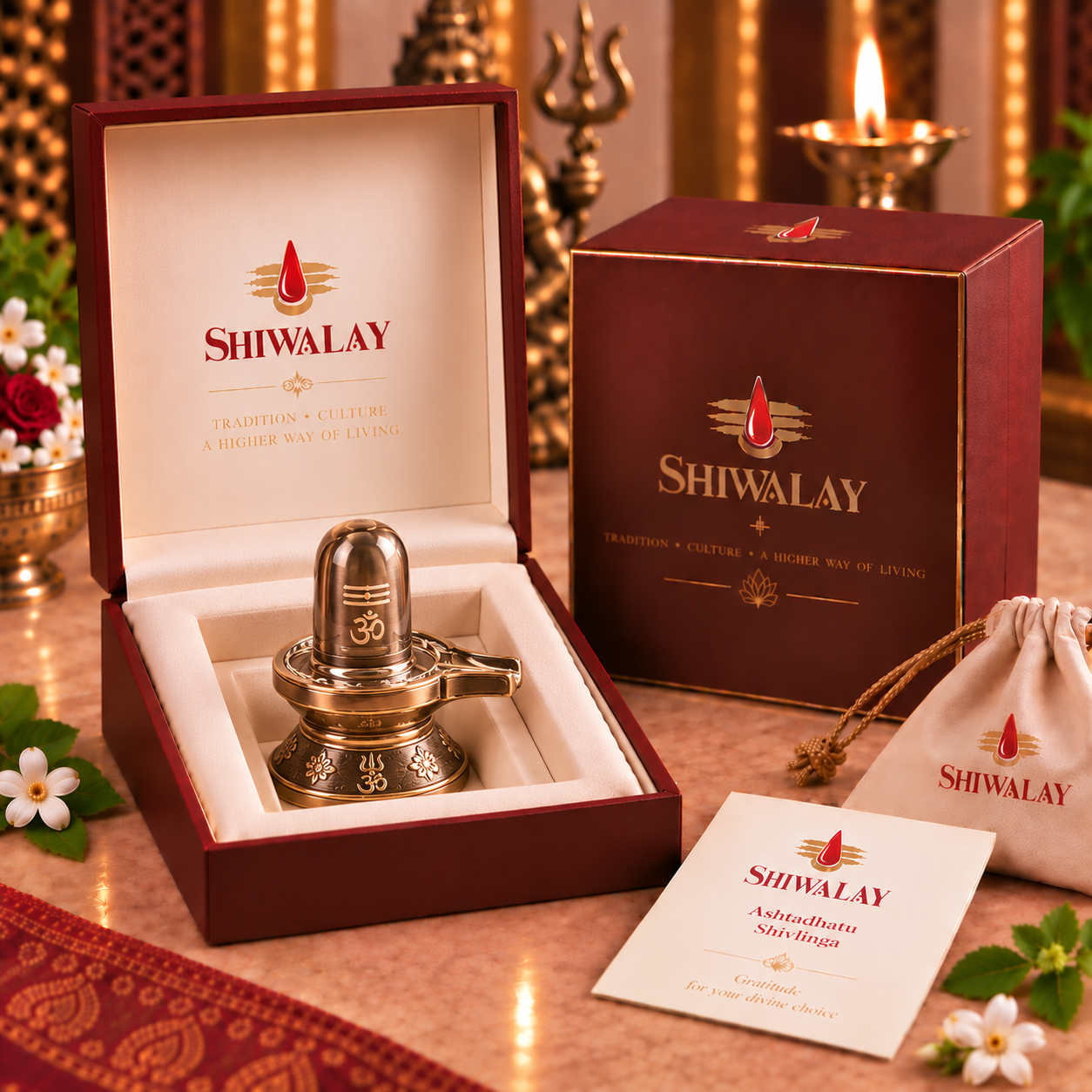
Ashtadhatu Shivling
Eight-metal alloy Shivlinga with jalhari, 3 inches
₹3,900
Cast in Aligarh, Uttar Pradesh
Lab certified
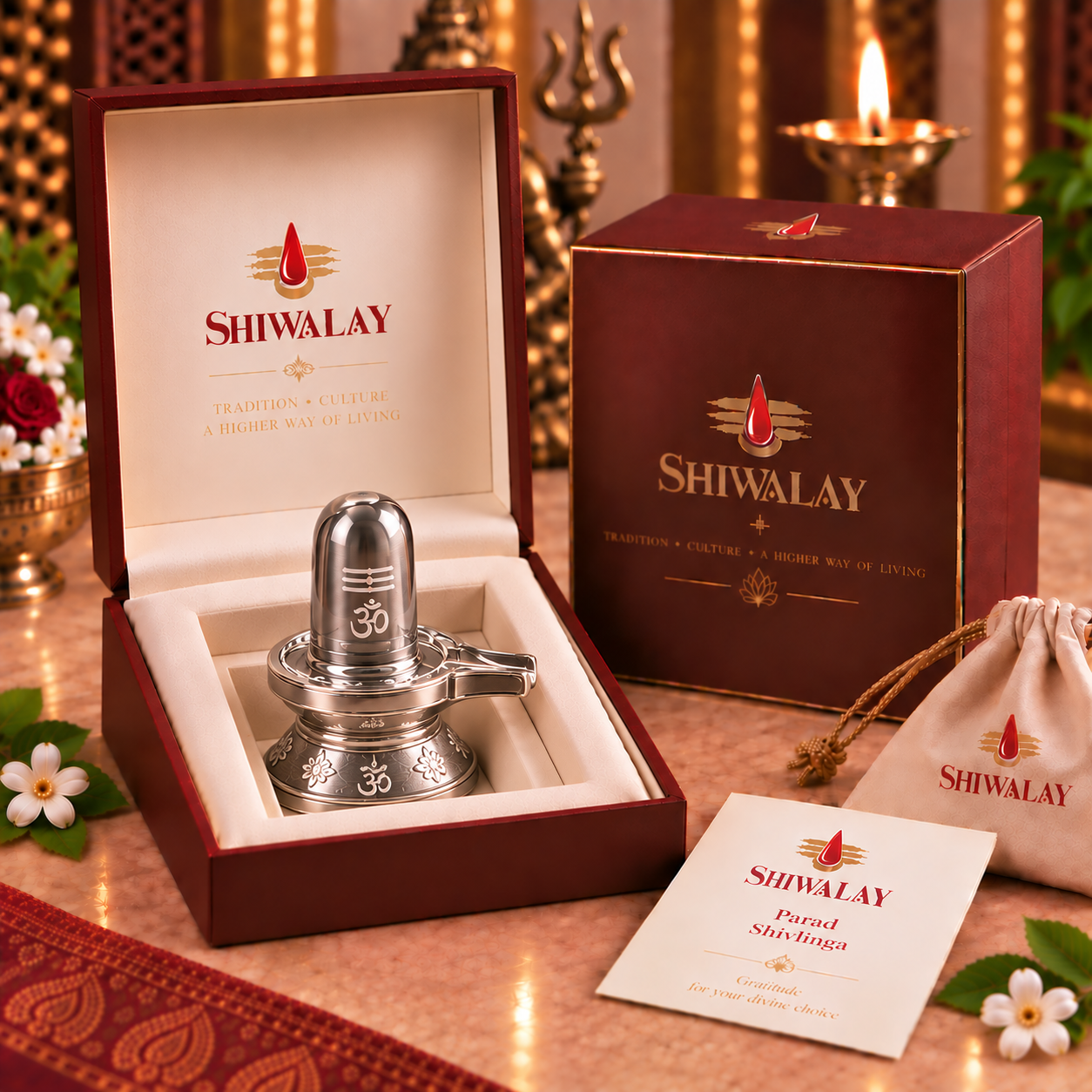
Parad Shivling
Mercury alloy Shivlinga (Rasalingam), 100 g, with assay
₹2,900
Made in Haridwar, Uttarakhand
Questions people ask about the shivling
- Which shivling is best for home?
- For most homes a Narmadeshwar shivling, because it is naturally formed, takes a full abhishek and needs no pran pratishtha. Sphatik is the choice for meditation. Parad is held most sacred by the rasa texts but needs careful handling. Size matters more than material: keep it under four inches.
- Can we keep a shivling at home?
- Yes. Keep one shivling, not several, in the puja room or the north-east, with the jalhari spout pointing north. Offer water daily if you can; a shivling is not meant to be left unattended for long periods.
- How do I identify an original parad shivling?
- It is unusually heavy for its size, silver-grey rather than mirror bright, and leaves no black mark on the palm or white cloth. The reliable proof is a metal assay stating the mercury content, which ships with ours. Avoid acid tests and the gold test; parad amalgamates gold and will damage jewellery.
- Is a parad shivling safe to keep at home?
- Yes, when it is a properly solidified alloy and handled sensibly: abhishek with water only, never consume or serve that water, do not heat or drop it, keep it off gold and silver, keep it from small children, and wash hands after the puja.
- Can gemstone shivlings be worshipped?
- Yes. Tradition accepts a lingam of any material offered with devotion. Use plain water for abhishek, because milk, honey and acids dull polished stone, and dry it afterwards.
- Which direction should the shivling face?
- Seat it so the jalhari spout, where the abhishek water drains, points north. The worshipper then sits facing east or north.