

Rudrabhishek at home: what it is, what you need, and the order to follow
The abhishek of the Shivling with the Rudra chants, done at home: the samagri, the eleven offerings in order, when to call a pandit, and what to do with the water afterwards.
Shravan begins, 26 Jul to 24 Aug · in 284 days8 min readReviewed 26 September 2026
Rudrabhishek is the abhishek, the ritual bathing, of the Shivling while the Rudra hymns are recited: the Sri Rudram from the Yajurveda, or the Rudrashtadhyayi in the northern tradition. It is traditionally done in Shravan, on Mondays, on Mahashivratri, on birthdays and before a new beginning.
A full Rudrabhishek with the complete Rudri path takes a trained pandit one to three hours. At home, a family can do a devoted, shorter version: the same offerings in the same order, with Om Namah Shivaya and the Mahamrityunjaya mantra in place of the full recitation. Both are Rudrabhishek; the second is the one this guide teaches.
When
- Any morning after bathing. Mondays, Pradosh evenings, the days of Shravan and Mahashivratri are the traditional choices.
- Allow about an hour for the home version, longer if the family chants together.
What to keep ready
Rudrabhishek at home: what it is, what you need, and the order to follow · shiwalay.com/journal/rudrabhishek-at-home
- A Shivling on a jalhari with a spoutNarmadeshwar Shivling →
- A copper lota or panchpatraCopper Lota →
- A wide plate or tray under the jalhariTo collect everything that flows offBrass Aarti Thali Set →
- GangajalKashi Gangajal, Sealed Copper Flask →
- Milk, curd, ghee, honey, sugarSmall bowls of each
- Sugarcane juice or coconut waterOptional, used in many families
- Bel patra · 108 leaves if you can, 21 at leastShiwalay Dried Bel Patra →
- White chandan, bhasma, akshatShiwalay Vibhuti →
- White flowers, dhatura, aak
- A clean white cloth to dry the ShivlingPuja Cloth Set →
- Diya, dhoop and camphorBhimseni Camphor →
- A rudraksha mala5 Mukhi Rudraksha Japa Mala →
Before you begin
- Seat the Shivling so the jalhari's spout points north, with the tray beneath it. You sit facing east or north.
- Sphatik, gemstone and parad Shivlings take water only. Use the full list of offerings on stone, Narmadeshwar and metal Shivlings.
- Keep each liquid in its own bowl, with a small spoon or shell, so the pour is slow and steady.
The abhishek, in order
Between each offering, pour a little clean water. Chant Om Namah Shivaya throughout, or the Mahamrityunjaya mantra if you know it.
- 1
Resolve
Light the diya and dhoop. With water in your right palm, take the sankalp in your name and your gotra, naming the purpose of the Rudrabhishek if there is one.
- 2
Ganesh first
Offer a flower and akshat to Ganesh, or to a supari placed as Ganesh, so the puja begins without obstacle.
- 3
Water and Gangajal
A slow stream of Gangajal from the lota over the Shivling.
- 4
Milk, then curd
Milk, a rinse of water, then curd, then water.
- 5
Ghee, then honey, then sugar
Each in turn, each followed by water.
- 6
Sugarcane juice or coconut water
If you are using them. Then a last, generous rinse of Gangajal.
- 7
Dry and dress
Wipe the Shivling with the white cloth. Apply chandan and a tripundra of bhasma. Offer akshat and white flowers.
- 8
Bel patra
Offer the bel leaves one by one, smooth side down, chanting Om Namah Shivaya with each. 108 if you have them.
- 9
Dhatura and fruit
Offer dhatura and aak flowers, then fruit and a sweet as naivedya.
- 10
Japa
One or more rounds of 108 on the rudraksha mala.
- 11
Aarti
Camphor aarti with Om Jai Shiv Omkara, then ask forgiveness for any mistake in the puja.
Afterwards
The abhishek water in the tray is charanamrit. A few drops may be taken as prasad from a stone or metal Shivling, never from a parad one. The rest goes to a tulsi-free plant, a tree or a garden, not into the drain.
Leave the bel leaves on the Shivling until the evening, then gather them with the flowers for a tree or flowing water.
When to call a pandit
For the full Rudri path, the eleven-fold Ekadashi Rudra, or a Rudrabhishek for a specific occasion such as a housewarming, families call a pandit who knows the chants. If you are far from home or can't find one, we arrange a Rudrabhishek at Kashi in your name, with the sankalp taken for you and a video sent afterwards.
What usually goes wrong
- Milk or honey on a sphatik or parad Shivling. They dull polished crystal, and parad is bathed in water only.
- Pouring in a rush. The abhishek is a slow, continuous stream; that is the point of it.
- Forgetting the tray. Everything that flows off the jalhari needs somewhere to go.
- Tipping the milk into the drain. Give it to a plant or tree.
- Using a shankh to pour. Use a lota; shankh water is not offered to Shiva in most traditions.
Quick answers
Can I do Rudrabhishek at home without a pandit?
Yes. The offerings, their order and the devotion are the same; in place of the Vedic Rudra hymns, which need training to recite correctly, the family chants Om Namah Shivaya and the Mahamrityunjaya mantra. For the full recitation, call a pandit.
What is the difference between an abhishek and a Rudrabhishek?
An abhishek is any ritual bathing of a deity. A Rudrabhishek is the abhishek of the Shivling done with the Rudra hymns, the Sri Rudram or the Rudrashtadhyayi, which is why it is longer and more elaborate.
Which day is best for Rudrabhishek?
Mondays, Pradosh, the days of Shravan and Mahashivratri are the traditional days. Families also do it on birthdays and before a new home, business or journey.
How long does a Rudrabhishek take?
The home version takes about an hour. A pandit's full Rudri path takes one to three hours, depending on how many rounds are recited.
Can women perform Rudrabhishek?
Yes. Women do the abhishek and chant Om Namah Shivaya and the Mahamrityunjaya mantra at home in every region. Some families reserve the Vedic recitation itself for trained priests; the abhishek is open to all.
Written by the Shiwalay desk from the Puranic sources and living household practice. Customs differ by region and family; where yours differs, follow yours. Nothing here promises an outcome.
Shop the guide
What this puja needs
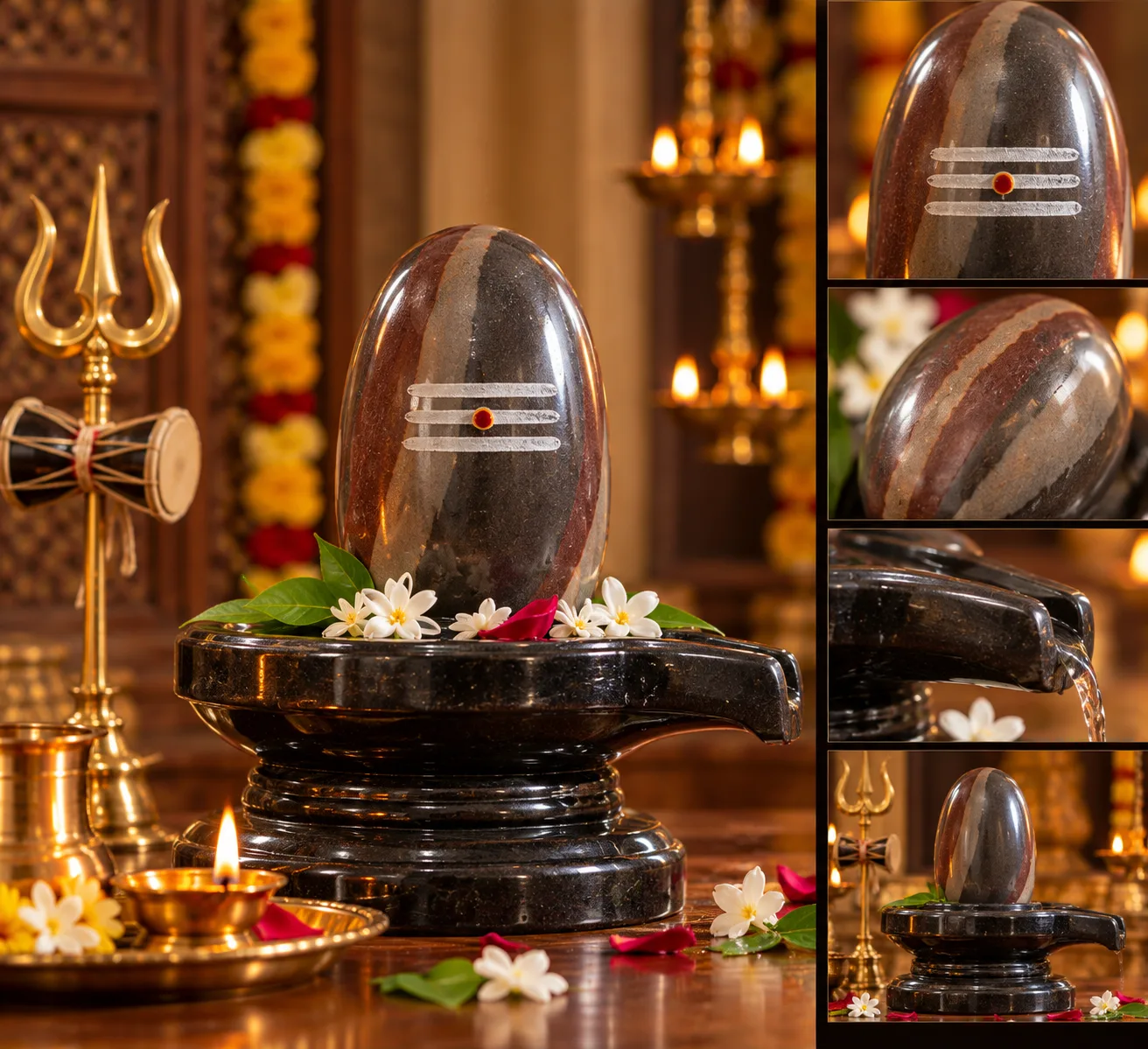
Narmadeshwar Shivling
Natural Narmada banalinga with brass jalhari and copper naag
Bakawan, Madhya Pradesh
Copper Lota
Hand-beaten copper lota for abhishek and Surya arghya, 500 ml
Made in Moradabad, Uttar Pradesh
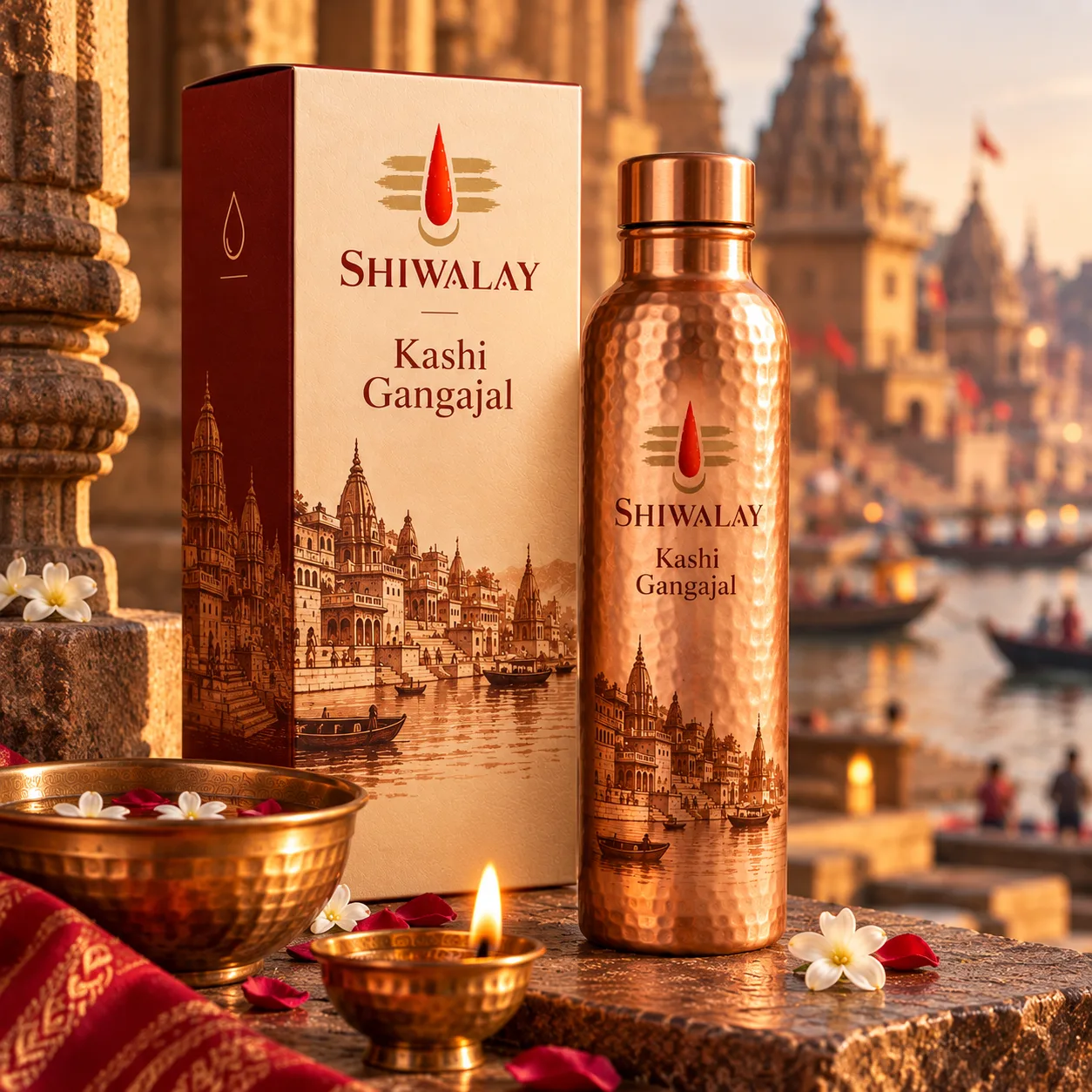
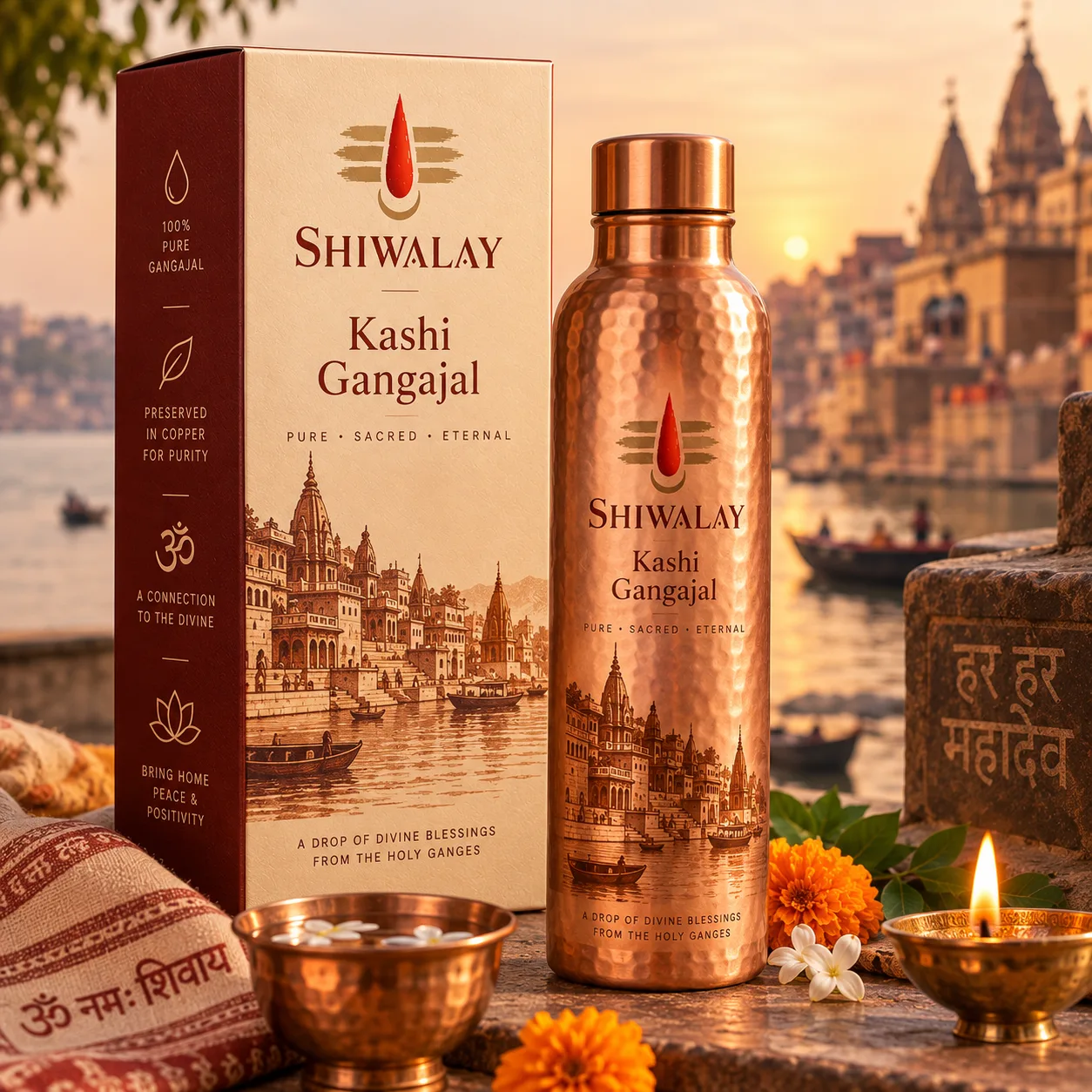
Kashi Gangajal, Sealed Copper Flask
250 ml from Dashashwamedh Ghat, in hand-beaten copper
Varanasi