

Chhath puja: the four days, the arghya to the Sun, and what goes in the soop
Nahay Khay, Kharna, the evening arghya and the dawn arghya, the fast between them, and the list of what the soop and daura carry to the ghat.
Chhath Puja, 15 Nov to 16 Nov · in 31 days8 min readReviewed 24 September 2026
Chhath is the worship of the Sun and of Chhathi Maiya over four days ending on the sixth day after Diwali. In 2026 the arghyas fall on Sunday 15 November at sunset and Monday 16 November at sunrise, with Nahay Khay on the 13th and Kharna on the 14th. It is kept above all in Bihar, Jharkhand, eastern Uttar Pradesh and Nepal's Terai, and wherever those families have gone.
It is the strictest household vrat in the Indian calendar: thirty-six hours without water, food cooked without onion, garlic or ordinary salt on a fire of mango wood or a clean stove, and the offerings carried to water and made standing in it. It is also done entirely without a priest. The vrati, usually the mother of the house, does everything herself.
When
- Nahay Khay, 13 November: the vrati bathes in a river or with river water, and the house eats one sattvic meal of rice, chana dal and lauki cooked by her.
- Kharna, 14 November: a full-day fast without water, broken at dusk with kheer of jaggery and rice, roti and a banana, after which the thirty-six-hour nirjala fast begins.
- Sandhya arghya, 15 November: the family walks to the ghat before sunset, about 5 pm, and the vrati stands in water offering to the setting sun.
- Usha arghya, 16 November: the same at the ghat before sunrise, about 6.15 am, to the rising sun. The fast is broken after.
What to keep ready
Chhath puja: the four days, the arghya to the Sun, and what goes in the soop · shiwalay.com/journal/chhath-puja-vidhi
- Soop (bamboo winnow) · 2 or moreEverything is arranged in these and lifted to the SunChhath Soop and Daura →
- Daura (bamboo basket) · 1 or 2Carried on the head to the ghatChhath Soop and Daura →
- ThekuaWheat flour, jaggery and ghee, shaped and fried; the essential prasad
- Rice laddoo (kasar)Of roasted rice flour and jaggery
- FruitsWhole, uncut: banana bunch, sugarcane stalks, coconut with water, dabh (green coconut), sweet lime, singhara, radish, turmeric and ginger plants with leaves
- Sugarcane · 5 stalksTied into a canopy over the offerings at the ghat
- Kalash or lotaBrass or copper, for the water of the arghyaTamra Kalash with Coconut Stand →
- Clay or brass diyasLit in the soop and floatedBrass Diya →
- Dhoop and camphorGaushala Dhoop Cups →
- SindoorApplied from the nose to the parting; the long sindoor of Chhath
- New clothes for the vratiA sari without stitching is traditional; a cotton sari is common now
- Betel leaves and nut, cloves, cardamom, whole spices
- Wheat and riceWashed and sun-dried at home for the prasad; nothing from a shop packet is used in the thekua
- Jaggery, gheeA2 Gir Cow Ghee, Puja Grade →
- A clean stove or mango woodThe prasad is cooked on a fire lit only for it
Day one: Nahay Khay
The house is cleaned as for Diwali, and the kitchen most of all. The vrati bathes, ideally in the river, and cooks one meal of arwa rice, chana dal and a lauki (bottle gourd) sabzi in a clean pot with rock salt. The family eats after her. From this meal onward nothing with onion, garlic or ordinary salt enters the kitchen until the fast ends.
Day two: Kharna
- 1
Fast through the day
No food, no water, from dawn.
- 2
Cook the kheer
In the evening, rice kheer with jaggery, on a fresh fire, along with roti. A banana is set beside it.
- 3
Offer, then eat
The kheer is offered to Chhathi Maiya with a diya and dhoop, then the vrati eats it alone in a quiet room; the family eats after. The thirty-six-hour nirjala fast begins with the last bite.
Day three: Sandhya arghya
- 4
Make the prasad
Thekua and kasar are made through the day by the vrati and the women of the house, in silence or with Chhath songs, on the clean fire.
- 5
Fill the soop
Each soop holds thekua, fruit, a coconut, sugarcane pieces, betel, a lit diya, and sindoor. Several soops for a large family; one per wish is the custom.
- 6
Walk to the ghat
The daura is carried on the head, usually by a man of the house, barefoot, in procession with the neighbourhood. The vrati walks behind, fasting, often singing.
- 7
Set the place
At the water's edge a small platform of earth is made, the five sugarcanes tied above it as a canopy, the soops arranged beneath, diyas lit.
- 8
Arghya
The vrati stands in the water, thigh-deep, facing the setting sun. Each soop is lifted in turn by her or a family member while she pours water and milk from the lota towards the sun. The Chhathi Maiya prayer is said. The sun sets; the soops are carried home and kept overnight before the altar, and the vrati keeps a vigil.
Day four: Usha arghya and parana
- 9
Before dawn
The same walk to the ghat in the dark, the same setting, with fresh diyas lit.
- 10
Arghya to the rising sun
The vrati stands in the water facing east; as the sun rises, the soops are offered as before. This is the arghya that answers the previous evening's.
- 11
Parana
Back home, the vrati breaks the fast with a sip of water from the lota, then thekua and ginger, then a meal. The prasad is distributed to everyone who comes; a Chhath house turns nobody away.
In a city without a river
Municipal Chhath ghats are set up on tanks and lakes in every large Indian city, and in Delhi, Mumbai and Bengaluru artificial ponds are dug for the two days. Failing those, a large tub of water on a terrace, where the vrati stands facing the sun, is accepted and widely used. The sun is the same.
What usually goes wrong
- Buying the thekua. It is made at home, from grain washed and dried at home. This is the one rule Chhath families do not bend.
- Cut fruit in the soop. Everything is offered whole.
- The vrati fasting while also managing guests. The house takes over everything except the cooking of prasad; she is to be left in peace.
- Nirjala kept by someone who is unwell. Chhathi Maiya is not honoured by a hospital visit; another woman of the house may take the vrat, or water may be taken with a prayer.
- Plastic at the ghat. Bamboo, clay, brass and leaves are the tradition, and the ghat is left as it was found.
Quick answers
What are the Chhath puja dates and arghya times in 2026?
Nahay Khay on Friday 13 November, Kharna on Saturday 14 November, Sandhya arghya at sunset on Sunday 15 November (about 5 pm in Patna, 5.45 pm in Mumbai), and Usha arghya at sunrise on Monday 16 November (about 6.10 am in Patna, 6.45 am in Mumbai). The daily WhatsApp panchang confirms the times for your city.
Can Chhath be done without going to a river?
Yes. A pond, a lake, a municipal ghat, or a tub of water on a terrace in which the vrati can stand facing the sun. The offering is to the Sun; the water is where one stands to make it.
Who can keep the Chhath vrat?
Any adult, man or woman, though it is most often the mother of the household. It is undertaken as a vow, usually after a wish has been fulfilled or for a child's welfare, and once begun is kept every year. A family member can take it over when the vrati can no longer.
Why is thekua made at home and not bought?
Chhath prasad is made with grain the house has cleaned and dried itself, on a fire lit only for it, by people who are fasting or eating sattvic food, with nothing touched by onion, garlic or ordinary salt. A shop cannot promise that chain, so the thekua is always home-made.
Is Chhath only a Bihari festival?
It is oldest and largest in Bihar, Jharkhand, eastern UP and the Nepal Terai, but it is kept today wherever those families live: Delhi, Mumbai, Bengaluru, and abroad. Many families from other regions have begun keeping it after marrying into Chhath homes.
Written by the Shiwalay desk from the Puranic sources and living household practice. Customs differ by region and family; where yours differs, follow yours. Nothing here promises an outcome.
Shop the guide
What this puja needs
Brass Diya
Solid cast brass diya, 7 cm across, 120 g
Made in Moradabad, Uttar Pradesh
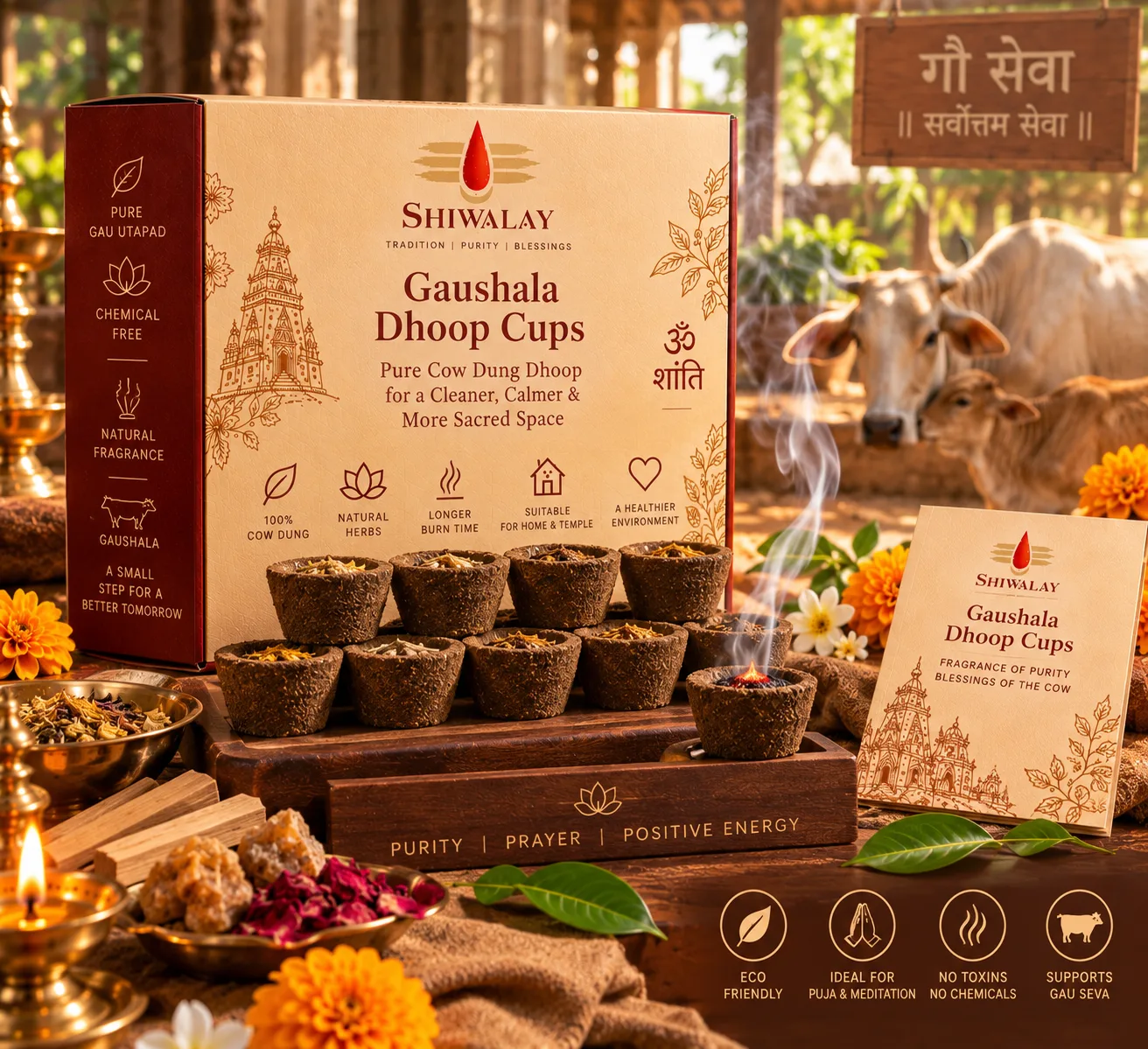
Gaushala Dhoop Cups
24 cow-dung and guggal dhoop cups, charcoal-free
Gaushala, Rajasthan