
Sharad Navratri at home: kalash sthapana, nine days, kanya puja
How to set up the kalash on the first day, what to do each morning and evening, the vrat rules, and how to close on Ashtami or Navami.
Sharad Navratri, 11 Oct to 19 Oct9 min readReviewed 24 September 2026
Sharad Navratri is nine nights for the Devi, beginning on the first day of the bright half of Ashwin. In 2026 it runs from Sunday 11 October to Monday 19 October, with Dussehra on the 20th. The practice at home has three parts: establishing the kalash on day one, a short puja each morning and evening, and the kanya puja that closes the fast.
Families do this differently by region and by what their grandmother did, and that is fine. What follows is the widely shared shape of the observance, with the choices marked where they exist. Nothing here needs a pandit; a household can do all of it.
When
- Kalash sthapana (ghatasthapana) is done on Pratipada, 11 October, in the morning muhurat. The panchang gives a window of roughly an hour after sunrise; if that is missed, the Abhijit muhurat around midday is the accepted alternative. Avoid the afternoon and night.
- Daily puja: once after bathing in the morning and once at dusk with the aarti. Keep the same times each day if you can; the routine is part of the practice.
- Kanya puja is done on Ashtami (18 October) or Navami (19 October). Many families do it on Ashtami; those who keep the full nine-day fast do it on Navami and break the fast after.
- Visarjan of the kalash and the sown barley is on Dashami, 20 October, after the morning puja.
What to keep ready
Sharad Navratri at home: kalash sthapana, nine days, kanya puja · shiwalay.com/journal/sharad-navratri-puja-vidhi
- Kalash · 1Copper or brass, with a coconut that fits its mouthTamra Kalash with Coconut Stand →
- Mango leaves · 5 or 7For the mouth of the kalash
- Coconut with husk · 1Wrapped in red cloth or chunri
- Red chunri or cloth · 1For the coconut and the Devi's photograph or murtiRed Chunri with Gota Border →
- Clay pot and clean soil · 1For sowing barley (jau)
- Barley grains (jau) · A handful
- Akhand jyoti diya · 1Optional; only if someone can keep it lit for nine daysBrass Diya →
- Cow ghee · 500 mlFor the akhand jyoti and daily aartiA2 Gir Cow Ghee, Puja Grade →
- Cotton wicks · 1 packet
- Kumkum, haldi, chandan, akshat (rice)For tilak and offeringAshtagandha Tilak Set →
- Flowers and a garlandRed hibiscus or roses are traditional for the Devi
- Agarbatti and dhoopMysore Sandalwood Agarbatti →
- CamphorFor the evening aartiBhimseni Camphor →
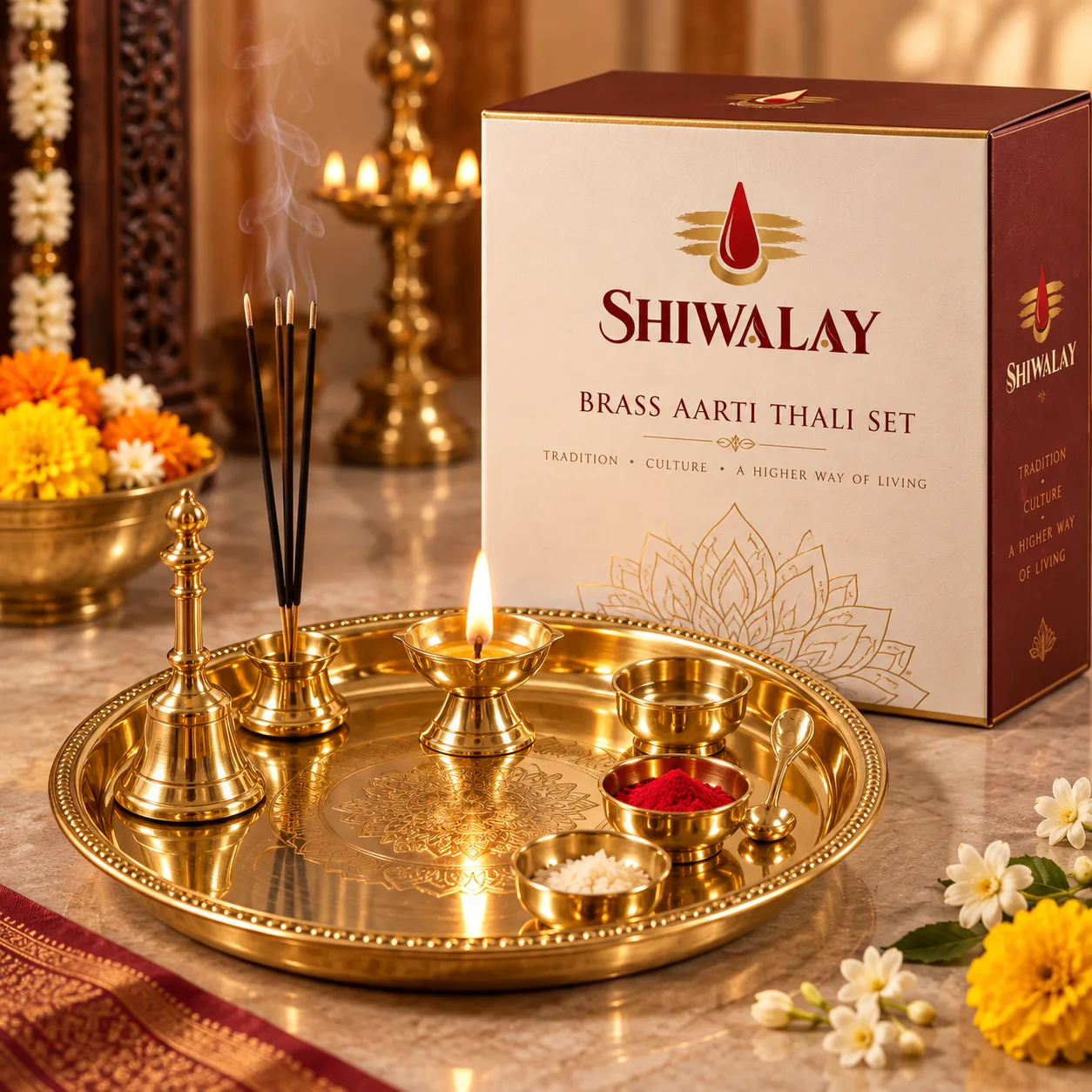
- Aarti thaliBrass Aarti Thali Set →
- Fruits, dry fruits and sweetsFor daily bhog; a different one each day is a nice custom
- Durga Saptashati or Devi Mahatmya, or a Chalisa bookWhichever you will actually readDurga Saptashati →
- Betel leaves, betel nut, cloves, cardamomFor the paan offering at the close of each puja
- Gifts for the kanyas · As many girls as invitedUsually a red chunri, bangles, a sweet and a small dakshina
Day one: kalash sthapana
Bathe, clean the puja space, and spread a red cloth on the chowki. Set the Devi's murti or photograph on it. Everything below is done facing east or north.
- 1
Sow the barley
Fill the clay pot with soil, sow the barley, sprinkle water. The sprouts that grow over nine days are read as the Devi's blessing on the home. Keep the pot beside the kalash, not under it.
- 2
Fill the kalash
Add water, a few drops of Gangajal if you have it, a coin, a betel nut, a little akshat and a flower. Tie a moli (red thread) around its neck.
- 3
Close it
Arrange the mango leaves in the mouth, stems down, then set the coconut wrapped in red cloth on top with the tuft facing you (north or east, by family custom).
- 4
Invoke
Light the diya and the agarbatti. With folded hands, invite the Devi to reside in the kalash for nine days: a simple sentence in your own language is enough; those who know the Sanskrit avahan may use it.
- 5
Sankalp
State your resolve: how many days you will fast, which form, and that you undertake it for the family's welfare. Say it aloud once, with water in the right palm, then release the water into a plate.
- 6
Light the akhand jyoti
Only if someone will be home to tend it. A diya that goes out is not an ill omen, but an unattended flame is a fire risk. A lamp lit and extinguished each puja is an accepted alternative.
Every day: morning and evening
- 7
Morning
After bathing, sprinkle water on the kalash and the barley pot, offer a fresh flower, apply tilak to the Devi, light the diya and agarbatti, and read one chapter of the Saptashati or the Durga Chalisa. Offer a fruit or sweet as bhog.
- 8
Evening
Aarti with camphor, a bhog of the day's dish, and the Devi's names. Families sing the Ambe Maa aarti; a recording is fine if nobody knows it.
- 9
The nine forms
Each day honours one of the Navadurga: Shailputri, Brahmacharini, Chandraghanta, Kushmanda, Skandamata, Katyayani, Kalaratri, Mahagauri, Siddhidatri. Reading a few lines about the day's form before the puja gives the nine days their shape. The practice of wearing a colour each day is a modern custom; follow it if you enjoy it.
- 10
Bhog
Sattvic only: fruit, milk sweets, halwa, coconut. Nothing with onion, garlic or grain that a fasting family member cannot share.
The vrat: what is eaten
Most families fast on the first and last days, or all nine. The rules are the same as any Vaishnav vrat: no grains (wheat, rice, lentils), no onion or garlic, no ordinary salt. What is allowed: fruit, milk and curd, sabudana, kuttu (buckwheat) and singhara (water chestnut) flours, samak rice, potatoes, sendha namak (rock salt), dry fruits, and tea or coffee if you take them.
One full meal in the evening after the aarti is the usual pattern (a phalahar), with fruit and milk during the day. Anyone pregnant, diabetic, elderly or unwell should adjust the fast to what their doctor allows; the intent matters, not the severity.
Ashtami or Navami: kanya puja
- 11
Invite
Nine girls between two and ten years old, and one boy (the langur, for Bhairav). Fewer is fine; two or three girls honoured properly is better than nine rushed.
- 12
Welcome
Wash their feet with water, apply tilak, tie a moli on the right wrist, seat them on a clean cloth facing east.
- 13
Feed
The traditional meal is puri, sooji halwa and kala chana. Serve them first, before anyone in the house eats.
- 14
Gift and blessing
A chunri, bangles or a small gift, and dakshina. Then touch their feet; on this day they are the Devi.
- 15
Havan
Families that do a havan do it on this day before the kanya puja, with the Durga Saptashati's Navarna mantra. If you have never done one, a small one with a pandit is better than a large one alone.
Dashami: closing
- 16
Final puja
Morning puja as usual, then thank the Devi and ask her to return next year.
- 17
Distribute the barley
Cut the sprouts. Give a few blades to each family member to keep in a purse or a book; offer some to the Devi and to the elders.
- 18
Visarjan
The kalash water is poured at the root of a tulsi or another plant, never down a drain. The coconut is broken and shared as prasad or offered in running water. The clay pot is returned to the earth.
- 19
Break the fast
Those who fasted the full nine days eat after the kanya puja on Navami or after the Dashami puja, starting with the prasad.
What usually goes wrong
- Setting the kalash at night or in the afternoon because the morning was missed. Use the Abhijit muhurat; if that is gone too, set it the next morning and count from there.
- An akhand jyoti left alone in an empty flat. Choose the daily diya instead.
- Buying nine of everything. One Devi, one kalash, one diya, done with attention, is the practice.
- Pouring the kalash water into the sink. It goes to a plant or to the ground.
- Fasting too hard. Someone who faints on Ashtami has not kept a better vrat than someone who ate fruit.
Quick answers
Can Navratri puja be done without a kalash?
Yes. A diya lit before the Devi's image each morning and evening, with the daily reading and bhog, is a complete observance. The kalash is the traditional centre of the nine days, but its absence does not spoil the puja.
What if the barley does not sprout?
It usually means the soil was too wet or the pot got no light. It is not an omen. Keep the puja going and offer the pot as it is on Dashami.
Can a family that eats non-vegetarian food keep Navratri?
Yes. The nine days are kept sattvic: no meat, eggs, alcohol, onion or garlic in the house for the nine days. That is the usual arrangement in most homes.
Is it necessary to keep the kalash facing a particular direction?
The kalash is set in the north-east or east of the puja space, and the worshipper faces east or north. The coconut's tuft pointing towards the worshipper is a common custom; some families point it east. Either is accepted.
What do I do with the chunri and the coconut after Navratri?
The chunri can be kept in the puja space or used again next year. The coconut is broken on Dashami and eaten as prasad, or offered in a river if that is your family's custom.
Can women keep the fast during their period?
Practice varies by family. Many households continue the fast and the reading but have another member perform the puja at the altar for those days. There is no single rule; follow what your family is comfortable with.
Written by the Shiwalay desk from the Puranic sources and living household practice. Customs differ by region and family; where yours differs, follow yours. Nothing here promises an outcome.
Shop the guide
What this puja needs
Brass Diya
Solid cast brass diya, 7 cm across, 120 g
Made in Moradabad, Uttar Pradesh
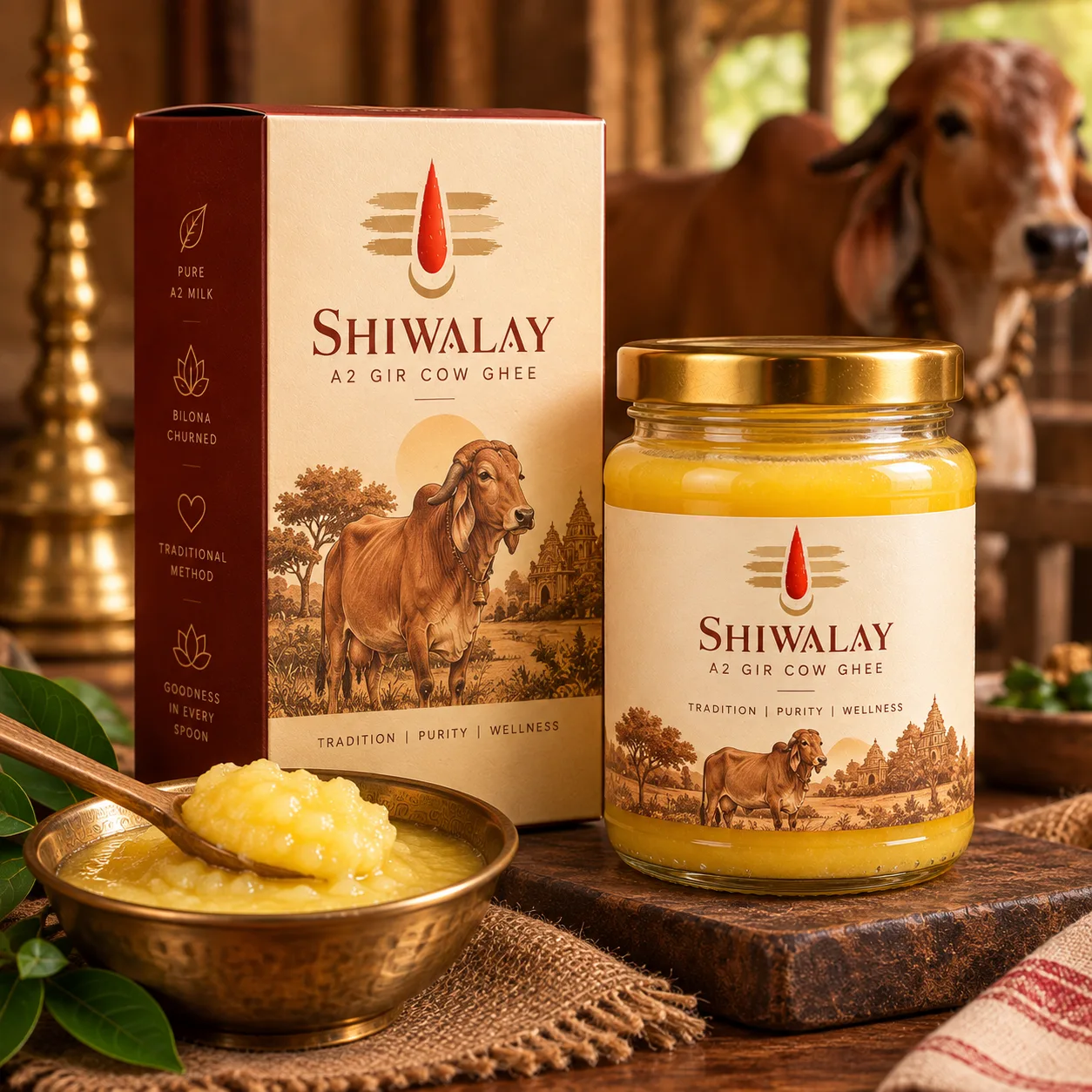
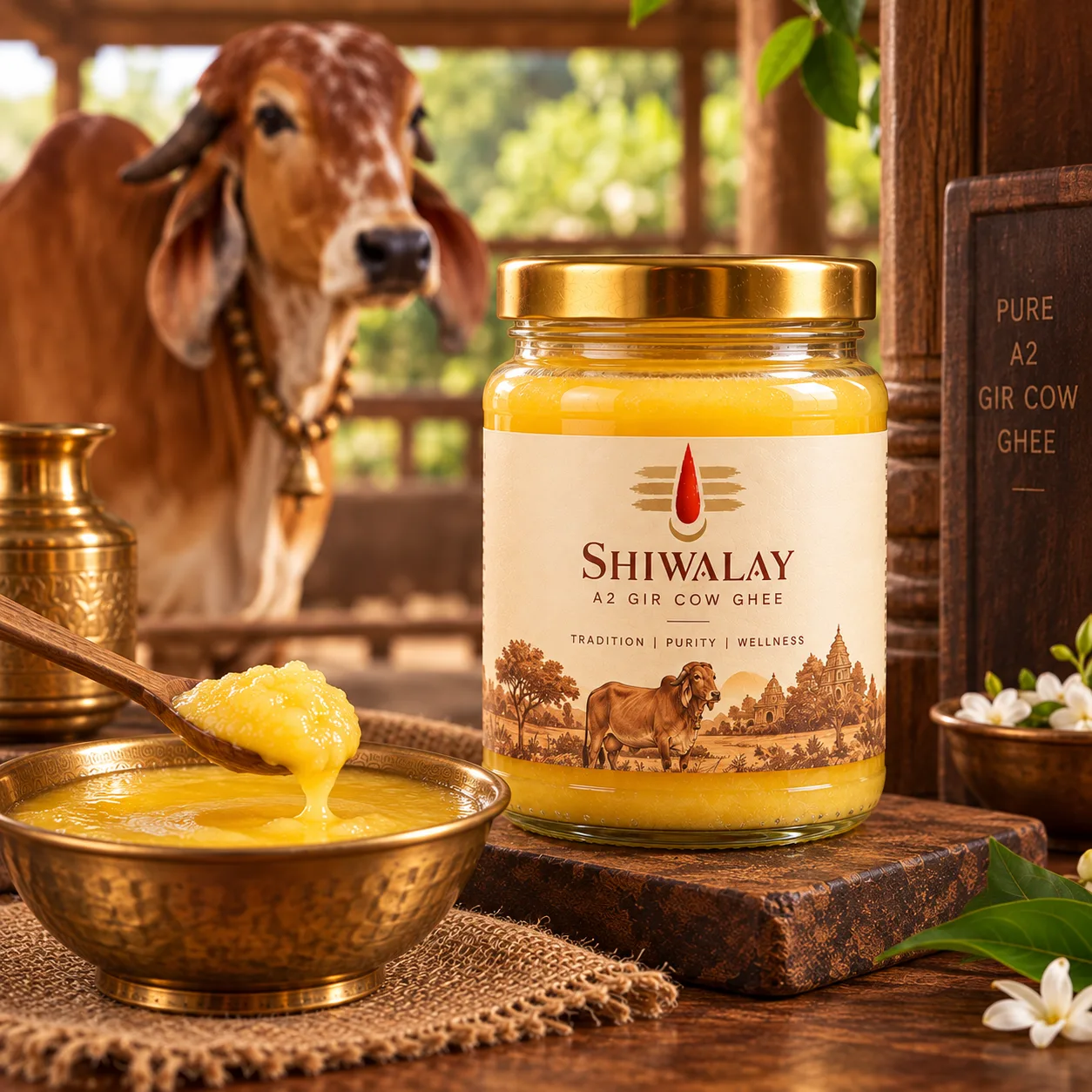
A2 Gir Cow Ghee, Puja Grade
Bilona-churned A2 Gir cow ghee, 500 ml jar
Gaushala in Saurashtra, Gujarat