
Daily puja at home: a ten-minute vidhi, and the samagri to keep ready
The morning puja most Hindu homes keep, step by step in about ten minutes: the five offerings in order, the samagri list for a month, and the small mistakes to avoid.
6 min readReviewed 17 November 2026
Nitya puja, the daily puja, is the short worship most Hindu homes keep each morning before the day begins: a lamp lit before the family deity, five simple offerings, a few minutes of mantra and the aarti. It is not meant to be long. Ten quiet minutes, kept every day, is the whole of it.
This guide follows the panchopachara, the five-fold offering of sandal, flowers, incense, lamp and food that the household tradition uses when the full sixteen-step shodashopachara is kept for festivals. Families differ in the order and the mantras; where yours has its own way, keep it.
When
- In the morning after bathing, ideally before sunrise or before the day's work begins. Many homes light a second lamp at dusk, sandhya, with a short aarti.
- About ten minutes. On festival days and on the deity's own day, the same steps simply go slower, with more mantra.
What to keep ready
Daily puja at home: a ten-minute vidhi, and the samagri to keep ready · shiwalay.com/journal/daily-puja-vidhi-at-home
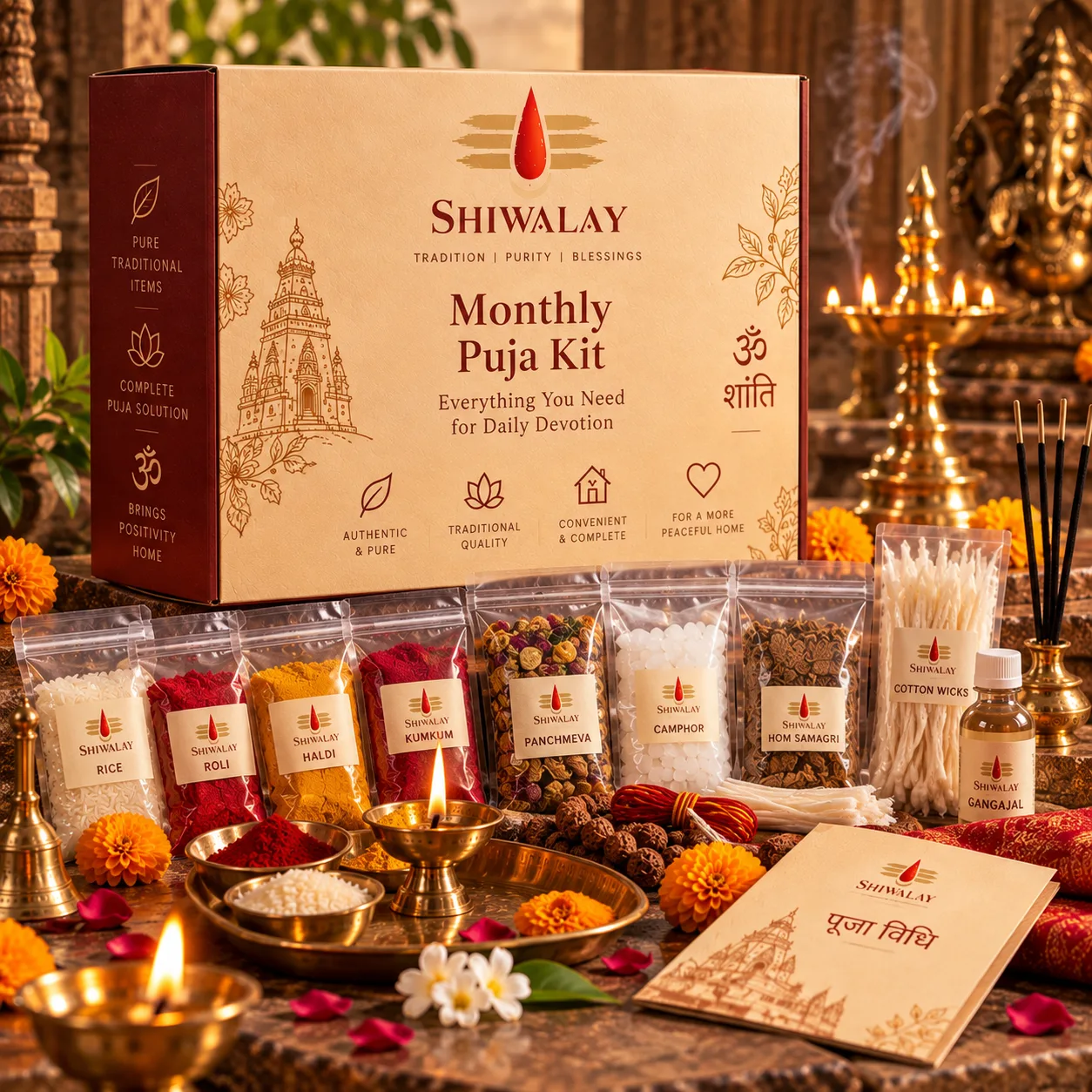
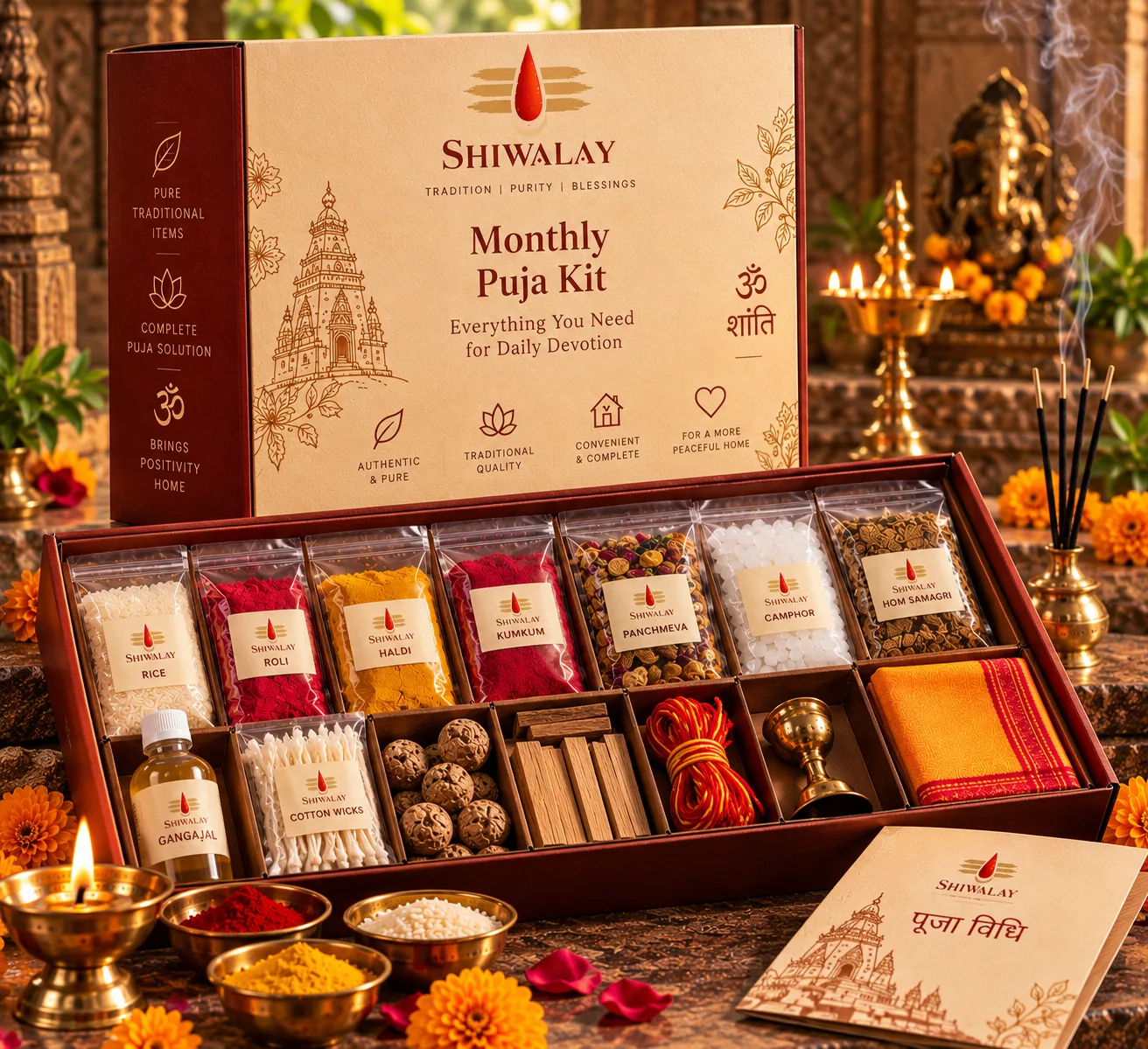
- A month of daily samagri in one tinAgarbatti, camphor, kumkum, haldi, akshat, wicks and an aarti bookDaily Puja Kit →
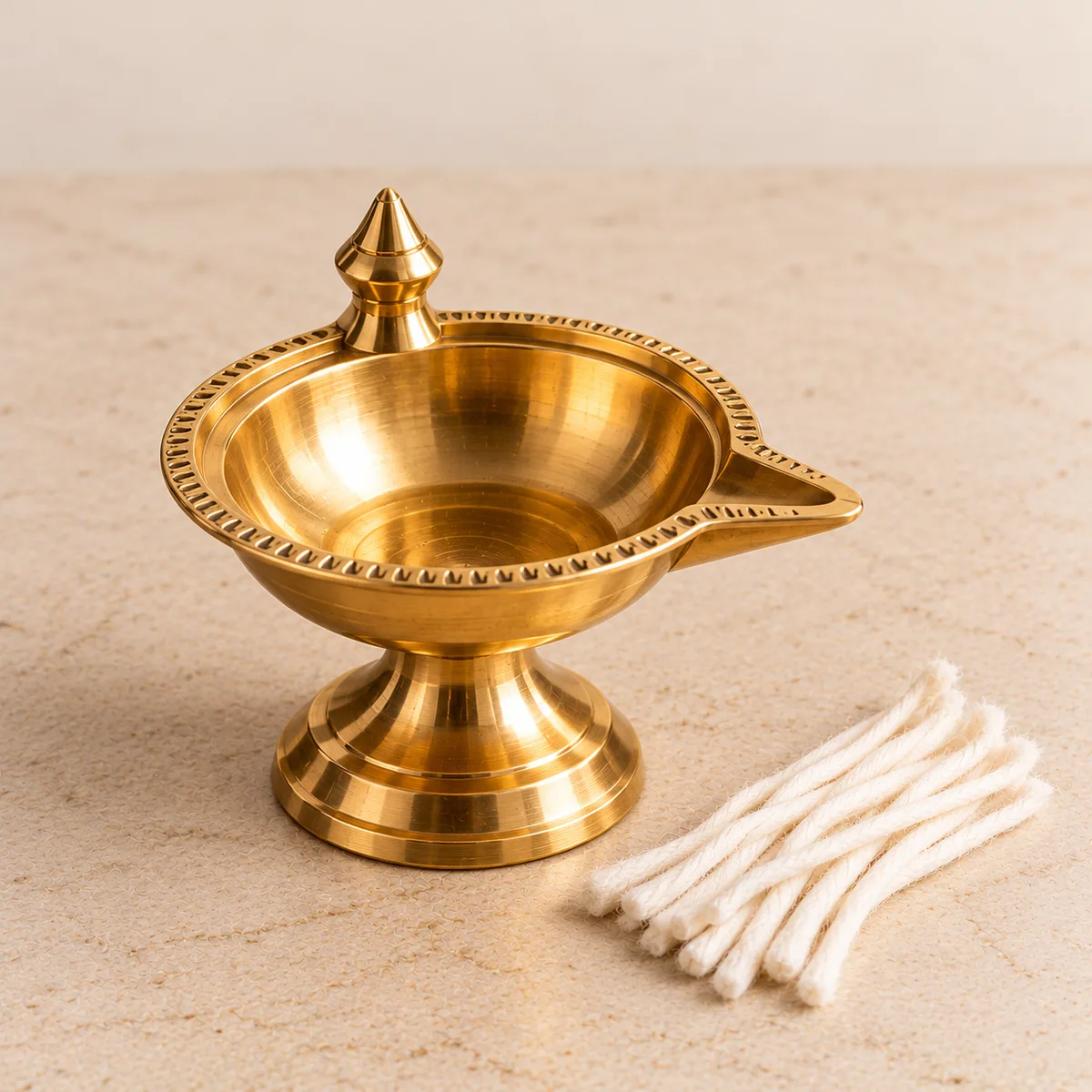
- A diyaBrass, or clay for festivalsBrass Diya →
- Ghee or til oil for the lampA2 Gir Cow Ghee, Puja Grade →
- Cotton wicksShiwalay Cotton Wicks →
- Agarbatti or dhoopMysore Sandalwood Agarbatti →
- Camphor for the aartiBhimseni Camphor →
- Kumkum, haldi, chandan and akshatAkshat is whole, unbroken riceAshtagandha Tilak Set →
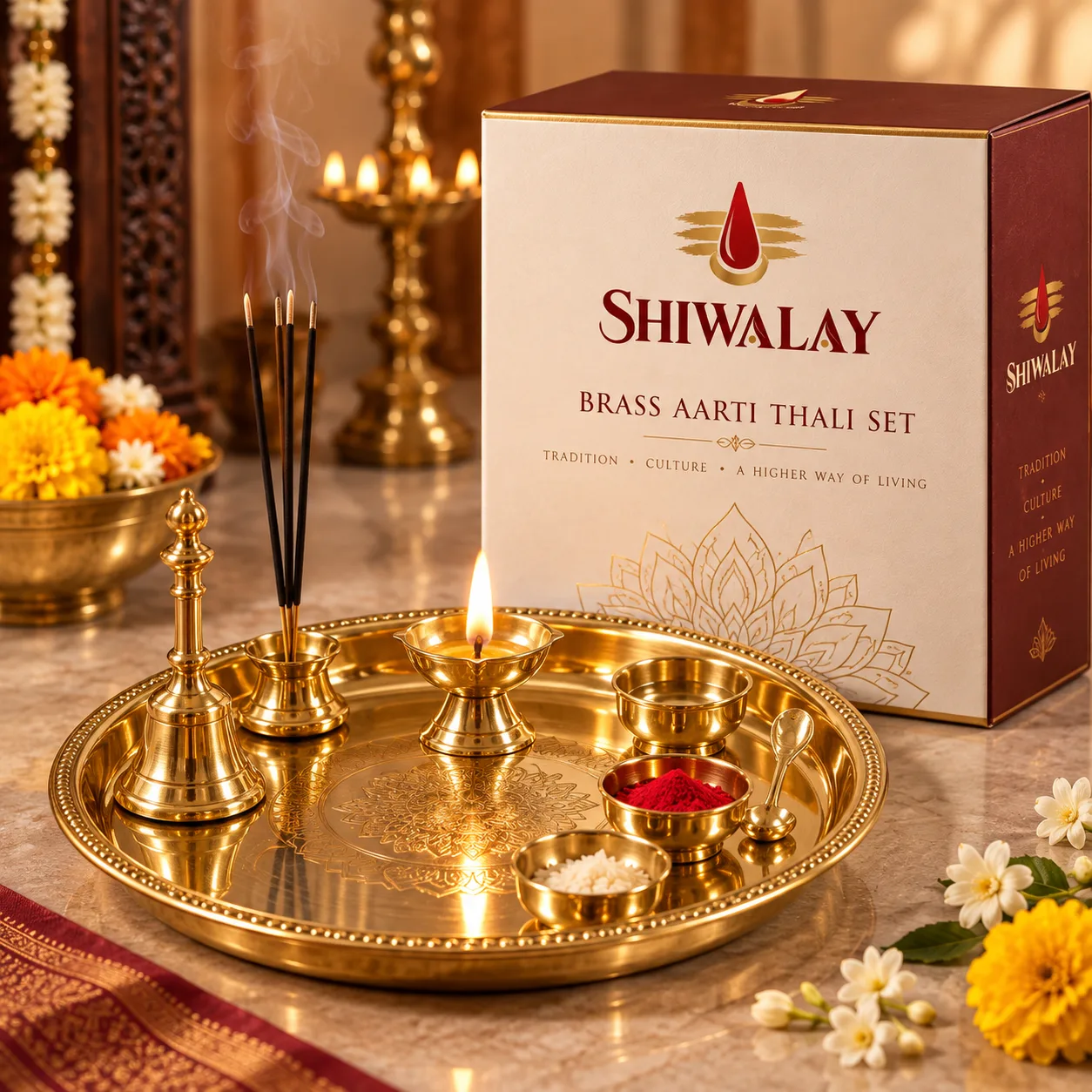
- A thali, a bell and a small bowl for naivedyaBrass Aarti Thali Set →
- A lota of clean waterCopper Lota →
- Fresh flowers and a sweet, fruit or mishriFrom home, the same morning
Before you begin
- Bathe and wear clean clothes. Sweep or wipe the altar, and change yesterday's flowers and water.
- Sit facing east or north, on an aasan rather than the bare floor.
- Set everything on the thali within reach, in the order you will use it, so nothing is searched for mid-puja.
The daily puja, in order
- 1
Light the lamp
Light the diya with ghee or til oil and set it to the right of the deity as you face them. The lamp burns through the puja.
- 2
Ganesh first
Offer a pinch of akshat and a flower to Ganesh, so the puja begins without obstacle, with Om Gan Ganapataye Namah.
- 3
Water
Sprinkle a little water on the deity and the altar from the lota, or bathe a small metal murti and wipe it dry.
- 4
Gandha: sandal and kumkum
Apply chandan or kumkum to the deity with the ring finger, and haldi where your family offers it, then a few grains of akshat.
- 5
Pushpa: flowers
Offer fresh flowers at the deity's feet. Tulsi to Vishnu and Krishna; bel patra to Shiva; red flowers to the Devi and Hanuman.
- 6
Dhupa: incense
Light the agarbatti or dhoop and wave it clockwise before the deity, three or seven times, then set it in its stand.
- 7
Deepa: the lamp
Lift the diya and wave it clockwise before the deity, from the feet to the face.
- 8
Naivedya: the offering
Place the sweet, fruit or mishri before the deity with a little water, and sit for a moment while it is offered.
- 9
Mantra
A few minutes of your family's mantra, or the deity's name, on a mala if you keep one: a round of 108 is traditional, eleven is enough on a hurried day.
- 10
Aarti and close
Camphor aarti with the bell, then a prayer asking forgiveness for anything missed. Take the naivedya as prasad and share it.
Keeping it every day
The daily puja works best when nothing has to be found or bought on the morning itself. A month's samagri kept in one place, wicks rolled in advance and the thali set out the night before turn ten minutes into a habit rather than an effort.
If a morning is missed, the tradition does not ask you to make it up; light the lamp at dusk, or simply begin again the next day.
What usually goes wrong
- Blowing out the lamp with your breath: by tradition it is left to burn out, or put out with a flower or a wave of the hand.
- Offering stale or fallen flowers, or flowers smelled first: only fresh ones picked for the deity.
- Offering tulsi to Ganesh, or ketaki to Shiva, both traditionally avoided.
- Leaving yesterday's naivedya and water on the altar: clear them each morning before you begin.
Quick answers
How long should daily puja take?
About ten minutes for the five offerings, mantra and aarti. The length matters less than keeping it every day; on festival days the same steps simply go slower.
What is the minimum daily puja?
Lighting a lamp before the deity, offering a flower or a few grains of akshat, saying the deity's name and doing a short aarti. Many families keep exactly this on busy mornings.
What should a daily puja kit contain?
The consumables used every morning: agarbatti or dhoop, camphor, kumkum, haldi, akshat, cotton wicks and ghee or oil for the lamp, in quantities for a month. Shiwalay's Daily Puja Kit holds 60 agarbatti, 50 g of camphor, kumkum, haldi, akshat, 90 wicks and an aarti book in one tin.
Should daily puja be done in the morning or the evening?
Traditionally in the morning after bathing, before the day's work. Many homes also light a lamp at dusk with a short aarti; either is better than none, and both is the household ideal.
Which direction should I face during puja?
East or north is traditional, with the deity facing west or south towards you. Where the room does not allow it, a clean, quiet place matters more than the direction.
Can daily puja be done without a pandit?
Yes. Nitya puja is the household's own worship and has always been done by the family. A pandit is called for samskaras, havans and festival pujas with the full sixteen steps.
Written by the Shiwalay desk from the Puranic sources and living household practice. Customs differ by region and family; where yours differs, follow yours. Nothing here promises an outcome.
Shop the guide
What this puja needs
Daily Puja Kit
Thirty days of daily puja samagri in one tin
Blended in Mysore and Kannauj
Brass Diya
Solid cast brass diya, 7 cm across, 120 g
Made in Moradabad, Uttar Pradesh
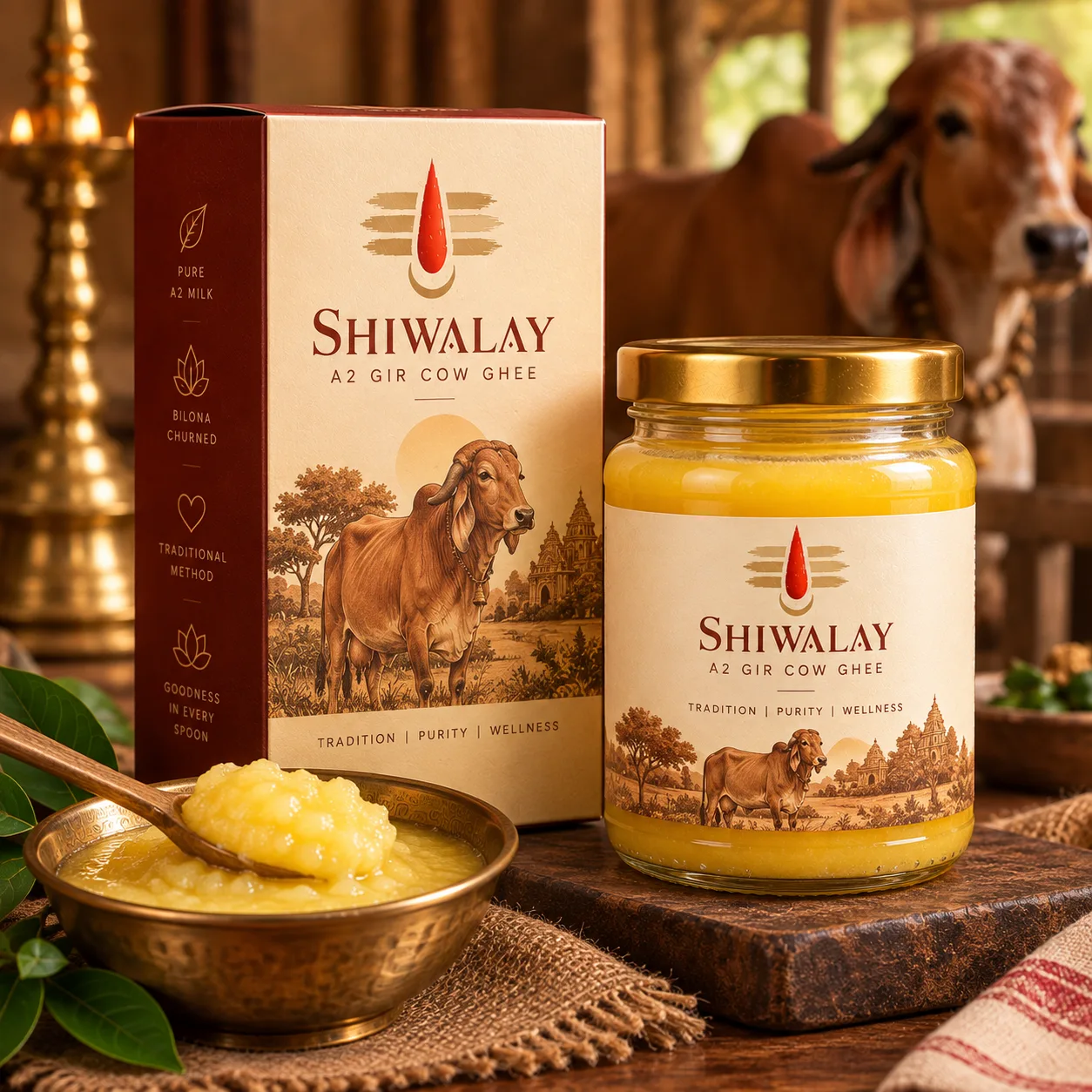
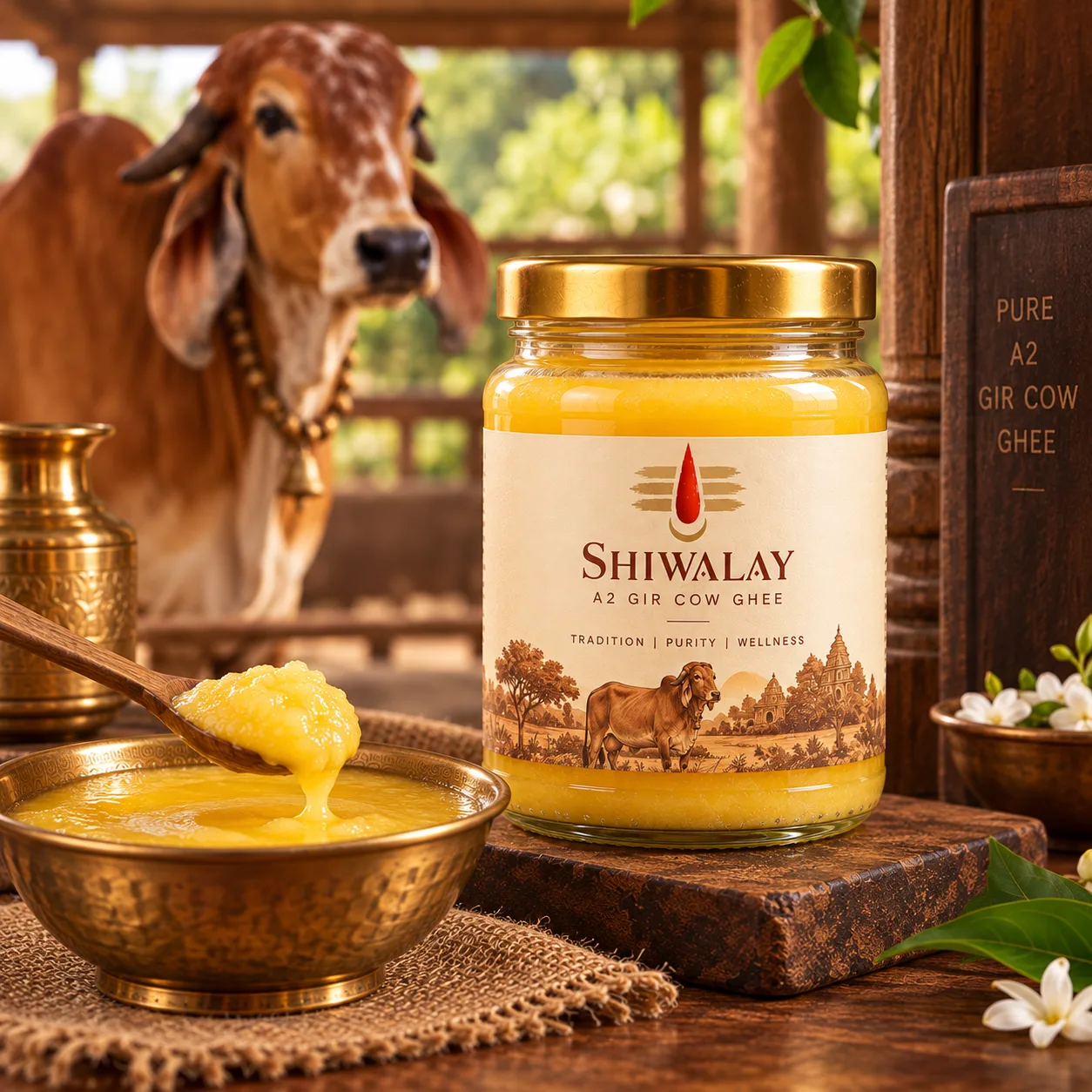
A2 Gir Cow Ghee, Puja Grade
Bilona-churned A2 Gir cow ghee, 500 ml jar
Gaushala in Saurashtra, Gujarat