

Mahashivratri at home: the fast, the four prahar puja, and the night vigil
How to keep Mahashivratri on 6 March 2027: what to prepare, the abhishek for each quarter of the night, what to offer and what never to, and how to close the fast the next morning.
Mahashivratri, 6 Mar, Saturday · in 143 days9 min readReviewed 26 September 2026
Mahashivratri, the great night of Shiva, falls on the fourteenth night of the waning moon in Phalgun (Magh in the southern calendar). In 2027 it is on Saturday 6 March. The tradition keeps it as a night, not a day: a fast from morning, an abhishek of the Shivling in each of the four quarters (prahar) of the night, and a vigil until dawn.
You don't need a temple to keep it well. A Shivling at home, a lota of water, bel leaves and an hour of quiet in each prahar are the whole of it. This guide takes you through the day in order, with the samagri list you can print.
When
- The fast begins at sunrise on Mahashivratri and closes the next morning after sunrise, within the time the panchang gives for the end of Chaturdashi.
- The night is divided into four prahar of roughly three hours each, from sunset to sunrise. The most important moment is nishita kaal, the hour around midnight; the panchang prints its exact window for your city.
- If four separate pujas are too much, one full puja in nishita kaal is the traditional minimum, with the rest of the night kept in japa or bhajan.
What to keep ready
Mahashivratri at home: the fast, the four prahar puja, and the night vigil · shiwalay.com/journal/mahashivratri-puja-vidhi
- A Shivling on a jalhariNarmadeshwar, sphatik, metal or stoneNarmadeshwar Shivling →
- GangajalKashi Gangajal, Sealed Copper Flask →
- A copper or brass lota, or a panchpatra, for the waterCopper Lota →
- Milk, curd, ghee, honey and sugarOne for each prahar, or mixed as panchamrit
- Bel patra · 21 or 108 leavesThree leaflets on each stem, unbrokenShiwalay Dried Bel Patra →
- Dhatura, aak and white flowersWhatever is available locally
- Bhasma (vibhuti) and white chandanShiwalay Vibhuti →
- AkshatWhole, unbroken rice
- Ber (jujube) and other seasonal fruitBer is the traditional Shivratri fruit
- Diya, ghee and cotton wicksBrass Diya →
- Dhoop or agarbatti, and camphor for aartiBhimseni Camphor →
- A rudraksha mala for japa5 Mukhi Rudraksha Japa Mala →
- A bellBrass Ghanti with Nandi Handle →
The day before and the morning
On the day before, Trayodashi, eat one simple meal without onion and garlic. Clean the puja space, wash the Shivling and jalhari, and gather the samagri, especially the bel leaves, which are hard to find late on the day itself.
On Mahashivratri morning, bathe early and take the sankalp: with water in your right palm, say that you keep the Mahashivratri vrat for Shiva and will close it tomorrow morning. Then offer water to the Shivling and a few bel leaves. The day is kept quietly, in japa of Om Namah Shivaya, reading, or visiting a Shiva temple.
What you can eat
Most households keep a phalahar fast: fruit, milk, curd, dry fruit, sabudana, potato, kuttu or singhara flour, and sendha namak instead of ordinary salt. No grains, lentils, onion or garlic.
Some keep it nirjala, without water, until the nishita puja. That is a choice for the fully able. Anyone unwell, pregnant, elderly or on medication should keep phalahar and take their medicine; the vrat is complete.
The four prahar puja
Each prahar has the same shape: a short abhishek, offerings, japa and aarti. Tradition assigns one liquid to each prahar, and you can follow it or simply use water and milk each time.
- 1
First prahar, after sunset: milk
Light the diya. Pour water, then milk, slowly over the Shivling while chanting Om Namah Shivaya. Rinse with clean water, apply chandan, offer bel leaves and flowers, and do a short aarti.
- 2
Second prahar, late evening: curd
Abhishek with curd, then water. Offer bel leaves with akshat, and read the Shiv Chalisa or any Shiva stotra you know.
- 3
Third prahar, around midnight: ghee
This is nishita kaal, the heart of the night. Abhishek with ghee, then water. Apply bhasma as three horizontal lines, the tripundra. Offer bel leaves, dhatura and ber, and do a full aarti with camphor. Then sit for japa: 108 rounds of Om Namah Shivaya on the rudraksha mala, or the Mahamrityunjaya mantra.
- 4
Fourth prahar, before dawn: honey
Abhishek with honey, then water. Offer the last bel leaves and the fruit as naivedya. Close with the aarti Om Jai Shiv Omkara and a prayer of thanks.
Offerings Shiva receives, and a few he doesn't
- Bel leaves go smooth side down, with all three leaflets whole. Tradition holds that bel patra never goes stale, so a washed leaf can be offered again.
- Offer white chandan and bhasma. Haldi, kumkum and sindoor are offered to Parvati and the Devi, not to the Shivling.
- Tulsi, which belongs to Vishnu, and the ketaki (kewda) flower are not offered to Shiva.
- Water from a shankh is not poured on the Shivling in most traditions. Use a lota.
- Walk only half a circle around the Shivling and turn back, so you never step across the spout where the abhishek water flows out.
The vigil and the morning after
Jaagran, staying awake through the night, is the heart of Mahashivratri for many families. Bhajans, the Shiva Purana, a film of the Mahakal aarti, or simply sitting with the mala all count. If you must sleep, sleep after the nishita puja.
In the morning, bathe, offer water and a flower to the Shivling, and break the fast with prasad, then a normal meal. Do this after sunrise and before Chaturdashi ends; the panchang gives the time. Pour the collected abhishek water into a plant or garden, never down a drain.
What usually goes wrong
- Buying bel leaves on the day. They sell out in the afternoon; buy them a day early and keep them wrapped in a damp cloth.
- Pouring milk into the drain. Collect the abhishek water and milk in the jalhari's bowl and give it to a plant.
- Offering haldi or kumkum on the Shivling. Keep them for Parvati.
- Crossing the jalhari's spout during parikrama. Go half-way and turn back.
- A nirjala fast kept by someone on medication. Phalahar with medicine is the vrat for them, and it is complete.
Quick answers
When is Mahashivratri in 2027?
Saturday 6 March 2027. The fast begins at sunrise that day, the main puja is at nishita kaal around midnight, and the fast closes on the morning of 7 March after sunrise.
Can I keep Mahashivratri without a Shivling at home?
Yes. Keep the fast and the vigil, do the japa, and offer water and bel leaves at a Shiva temple, or to a picture of Shiva at home with water sprinkled on it. Many families bring a small Shivling home for this night and keep it on the altar afterwards.
What is the difference between Shivratri and Mahashivratri?
Masik Shivratri falls on the fourteenth night of every waning moon, twelve times a year. Mahashivratri is the one in Phalgun, the greatest of them, kept with the full night's vigil.
Which mantra should I chant on Mahashivratri?
Om Namah Shivaya, the five-syllable mantra, is chanted by everyone and needs no initiation. The Mahamrityunjaya mantra is also widely chanted through the night. 108 rounds on a rudraksha mala is the usual count.
Can I drink tea or water during the fast?
In the phalahar fast, yes: water, milk, tea and coffee are taken. Only the nirjala form excludes water.
What should I do with the flowers and bel leaves the next day?
Collect them with the abhishek water and place them under a tree, in a garden or in flowing water. They are not thrown into the household waste.
Written by the Shiwalay desk from the Puranic sources and living household practice. Customs differ by region and family; where yours differs, follow yours. Nothing here promises an outcome.
Shop the guide
What this puja needs
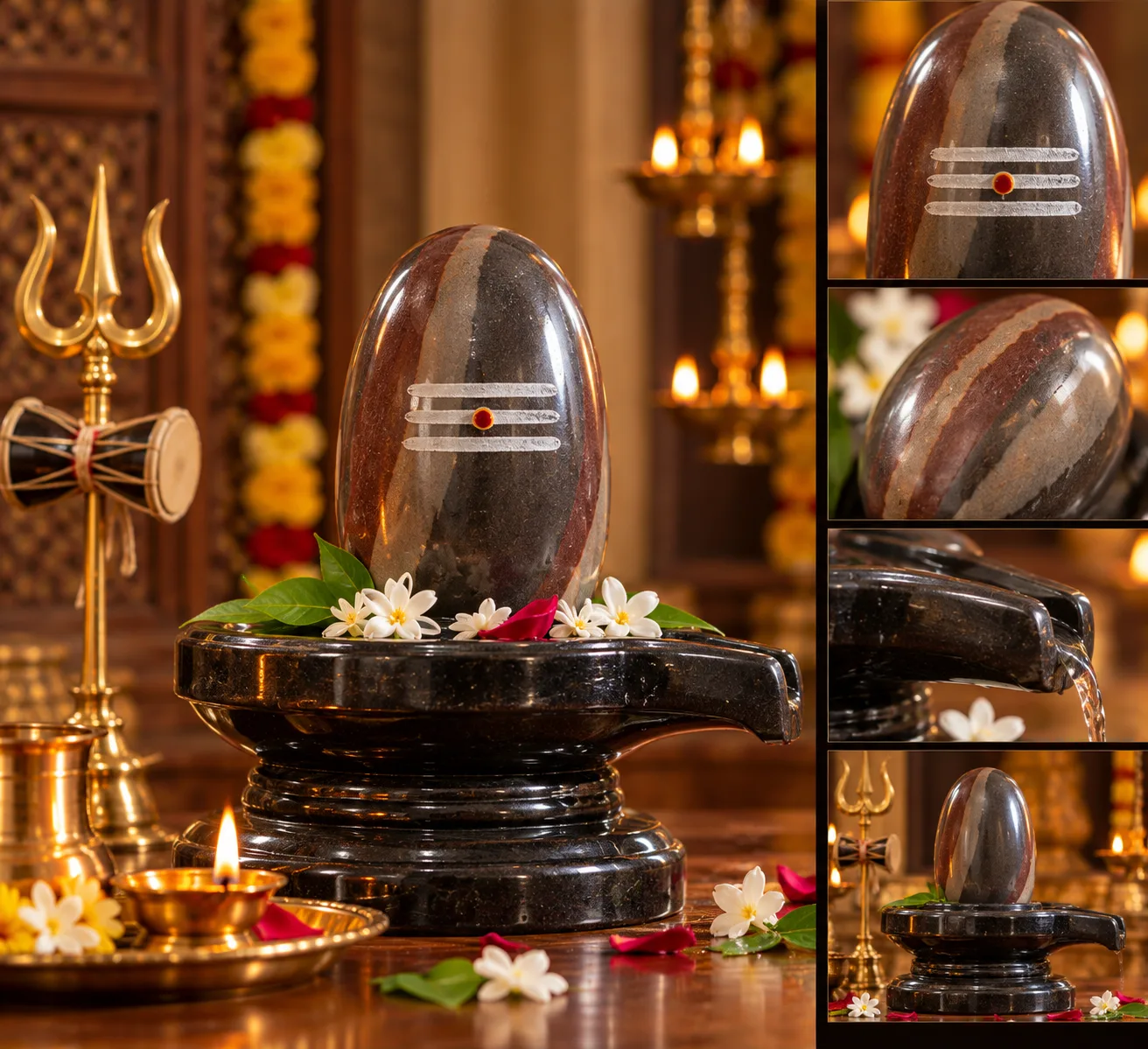
Narmadeshwar Shivling
Natural Narmada banalinga with brass jalhari and copper naag
Bakawan, Madhya Pradesh


5 Mukhi Rudraksha Japa Mala
108+1 Nepal beads, 7 mm, silk-knotted
Nepal, strung in Haridwar
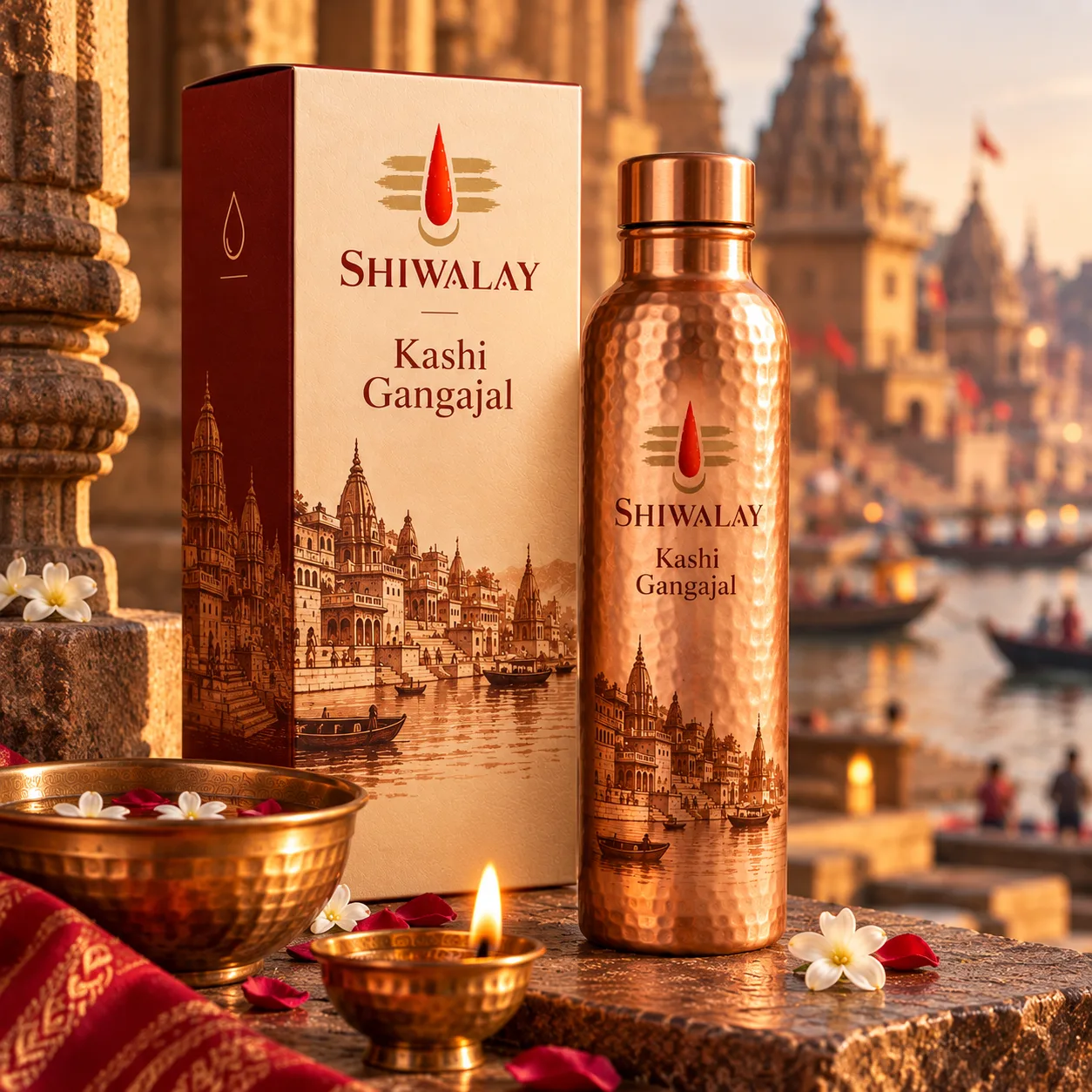

Kashi Gangajal, Sealed Copper Flask
250 ml from Dashashwamedh Ghat, in hand-beaten copper
Varanasi
Copper Lota
Hand-beaten copper lota for abhishek and Surya arghya, 500 ml
Made in Moradabad, Uttar Pradesh